Annapurna Base Camp Trek : An Overview
If anyone is planning to trek in Nepal, the Annapurna Base Camp Trek is the first name that comes to mind. Yes, it's been a popular trek destination in Nepal for ages. This trek is extremely beginner-friendly and adventurous as well. This trek is in the Annapurna region, which is part of the Himalayas. ABC trek stands at 4,130 m (13,550 ft) just at the heart of Annapurna Sanctuary. People right from teenagers to mid aged people are capable to go trekking on Annapurna Base Camp. Every year huge number of crowd are seen walking around this place. Though there are many other trekking destinations like Manaslu Circuit Trek, Everest Base Camp Trek, Annapurna Circuit Trek, Langtang Valley Trek, Mardi Himal Trek etc. Annapurna Base Camp Trek has been succesful in being the top and best choice among them. In fact, it has attracted better number of trekkers from other nation than any other trek destination.
Defining Altitude Sickness
Altitude Sickness is an illness in the body that usually occurs when a person goes to a place which is at a higher altitude. For anyone who is not used to going around higher altitude areas normally feel very congested and shortness of breath. Such illness is given a particular name, which is AMS(Acute Mountain Sickness). It is a normal ailment that is caused due to moving to a place where there is a change in oxygen level and a problem in breathing. Although it is not a serious disease, in some cases the sickness can move further and get severe, causing high-altitude pulmonary edema (HAPE) or high-altitude cerebral edema (HACE).
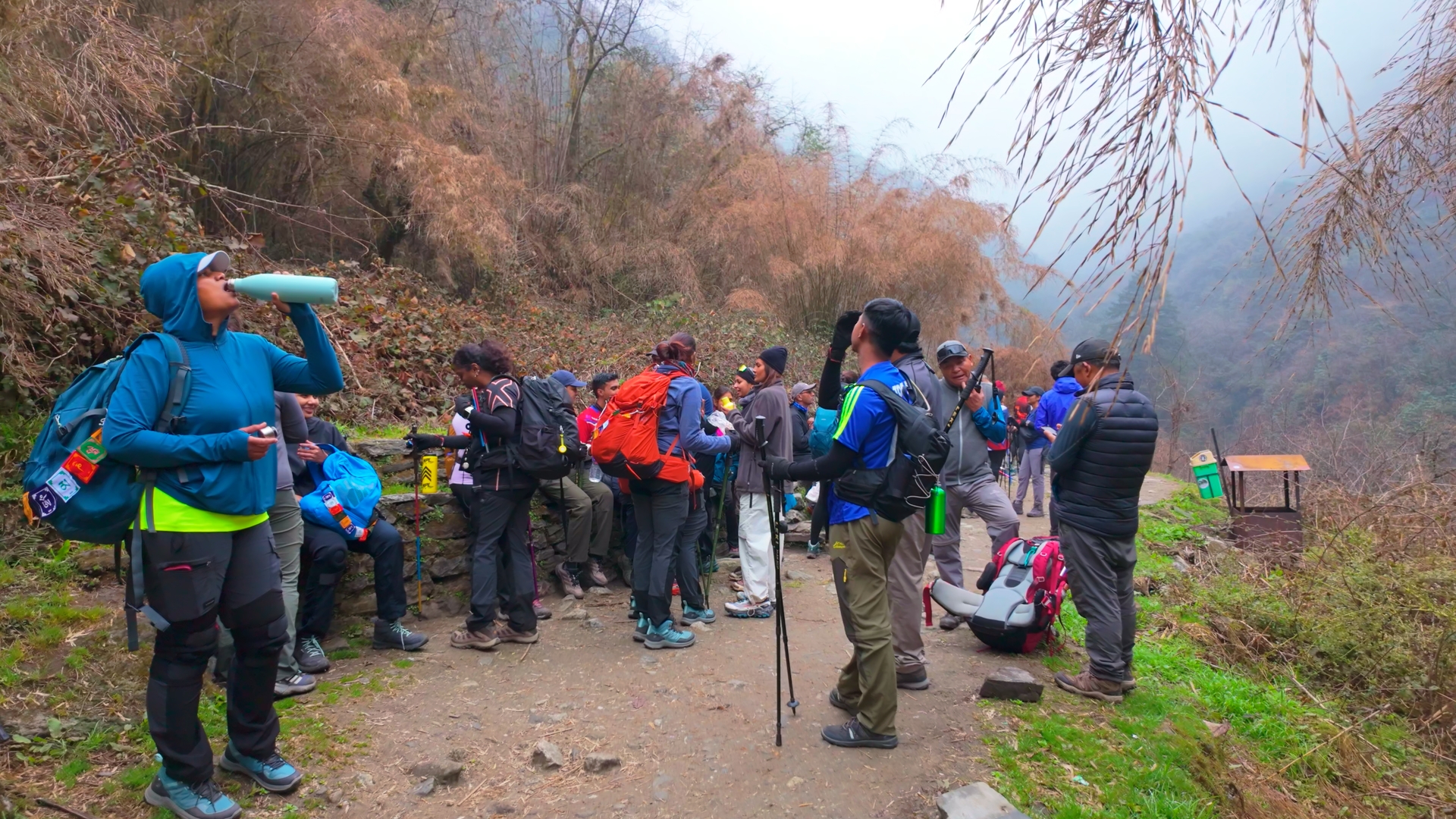
Altitude sickness in Annapurna Base Camp is very common but not so dangerous compared to Everest Base Camp Trek Altitude Sickness. However, its better to be well prepared for the worst so one should take proper precautions to stay safe whhile trekking to ABC. Sometimes, you might get confused of why altitude sickness occurs in the higher elevation. Well, as the name describes itself the higher altitude you reach the more problem you face in breathing.
In the table below the diffrence between lower and higher alitude has been clearified for ceratin subject points:
Preventive Measures for Altitude Sickness
Now, let’s discuss some measures for overcoming Altitude Sickness in Annapurna Base Camp.
Let’s start with the physical aspects.
Pre-workouts before trekking
You can go to the gym 5-6 months before you join trekking. You can do push-ups or walk on treadmills to make your body flexible and well-maintained. You can even walk on stairs in your home to get familiar with walking in steps so that balance will be maintained.
Mental exercise
Trekkers are advised to not only be physically prepared but also mentally stay fresh and strong. After all, trekking is a long day's journey that needs good concentration for at least a week. Doing meditation or the breathing in-out technique can be fruitful for making good mental balance.
Stay Hydrated and take a nutritious diet
Drinking water is good for the body not only on normal days but also on complex days. It is suggested that a person should drink 5-8 liters of fresh water daily to maintain good health. It helps a lot if you are going trekking. It is obvious that you will sweat a lot while walking for hours, and drinking enough water is very necessary. So, keep your water bottle close to you every time while trekking. Eating a healthy & nutritious diet is also very important while trekking. A healthy diet can make your body energised for the whole trekking days. The diet includes fresh fruits and vegetables, energy drinks, fibre-rich foods etc. You should avoid foods that can cause problems in the body, such as too much junk food and alcohol.
Acclimatization at certain places
This is one of the most important steps to consider carefully. One should take enough time to rest at points like Chomrong (2,170m). This can help in storing energy for moving ahead and maintaining your body well. Again after reaching a place like Machapuchare Base Camp (MBC, 3,700m) take a deep breath and give your body a good rest. Normally, trekkers do light exercise and breathing in-out techniques upon reaching this place. It’s a pre-preparation to make your body stay fit and safe just before you reach the summit of Annapurna Base Camp.
Take Prescribed Medicines
Just in case the problem gets complicated, trekkers can take some medicines that is prescribed by the doctor. These medicines should be compulsory in your packing list for Annapurna Base Camp Trek. Below are some suggested medicines:
- Acetazolamide (Diamox)
It is the most common medical tablet for treating AMS. It raises the raises the respiratory rate and advances the discharge of bicarbonate in the body. This maintains the balance of blood acidity. - Dexamethasone (4 mg every 6 hours)
It treats severe cases like HACE. - Nifedipine
It helps to cure HAPE risks by easing lung pressure. - ibuprofen
This pain killer help to treat headaches & nausea.
To sum up,
Coming to the end, I am highly hopeful that trekkers will get good guidance to overcome altitude sickness in Annapurna Base Camp after going through this article. Especially, if you are a new trekker and want to make a plan ahead of taking a trekking expedition to Annapurna Base Camp. Ás the saying goes Prevention is better then cure so you should make sure that you prevent yourself from the victim of altitude sickness in ABC by taking possible precautions and the above suggested safety tips.