
There's a reason people who've done the Annapurna Circuit trekking talk about it differently than other treks. Ask someone about Everest Base Camp, and they'll tell you about the mountain. Ask someone about the Annapurna Circuit, and they'll tell you about a village, a meal, a pass, a stranger they met on day nine. It's a trek that gets under your skin in a way that's hard to explain until you've walked it yourself.
The Annapurna Circuit Trekking: A Complete Guide

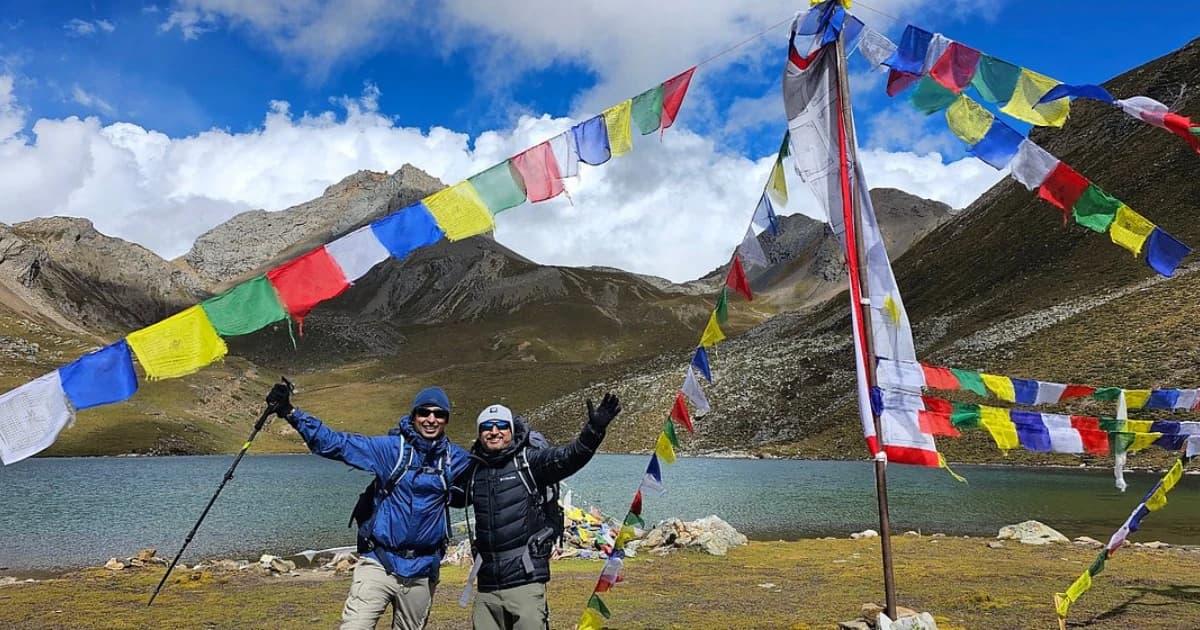
Tucked into the Annapurna region of central Nepal, this trek loops around the Annapurna massif, taking you through a landscape that changes so completely from start to finish that it barely feels like the same country. You start in humid, terraced farmland where rice paddies stack up hillsides like green staircases, and you end up crossing a high-altitude pass at over 5,400 meters, surrounded by nothing but rock, wind, and prayer flags snapping in the cold. In between, you pass through forests, desert-like plateaus, and villages that feel plucked from Tibet.
What makes this Trek different from the rest?
Most trekking routes in Nepal focus on getting you to one big payoff - a base camp, a viewpoint, a single dramatic peak. The Annapurna Circuit isn't built that way. It's less about one destination and more about the accumulation of everything along the route. You're not walking toward a single moment; you're walking through an entire cross-section of Nepal's geography and culture.
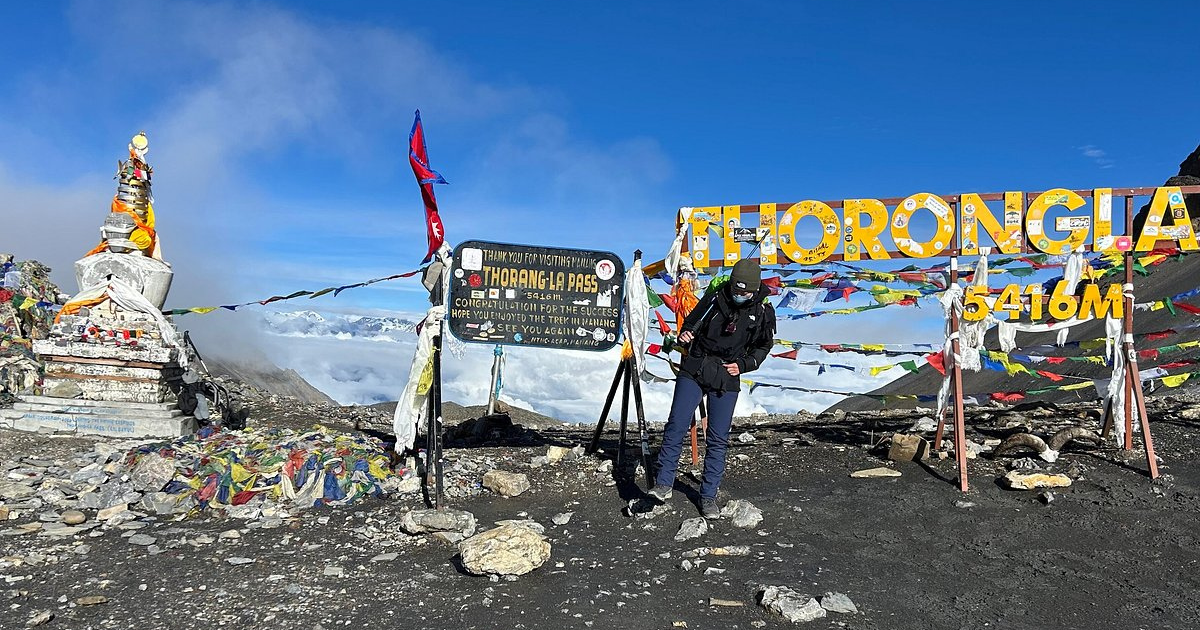
The trail typically runs somewhere between 160 and 230 kilometers, depending on where you start and end it, and it touches elevations from around 800 meters up to 5,416 meters at Thorong La Pass, the trek's most famous and most feared landmark. Along the way, you pass through communities belonging to different ethnic groups - Gurung, Thakali, and Manangi communities among them - each with their own architecture, food, and rhythm of daily life. Somewhere around the halfway point, the vegetation thins out, the air gets drier, and you suddenly find yourself in a landscape that looks more like the Tibetan plateau than anything typically associated with Nepal.
The Annapurna Circuit Trekking Route
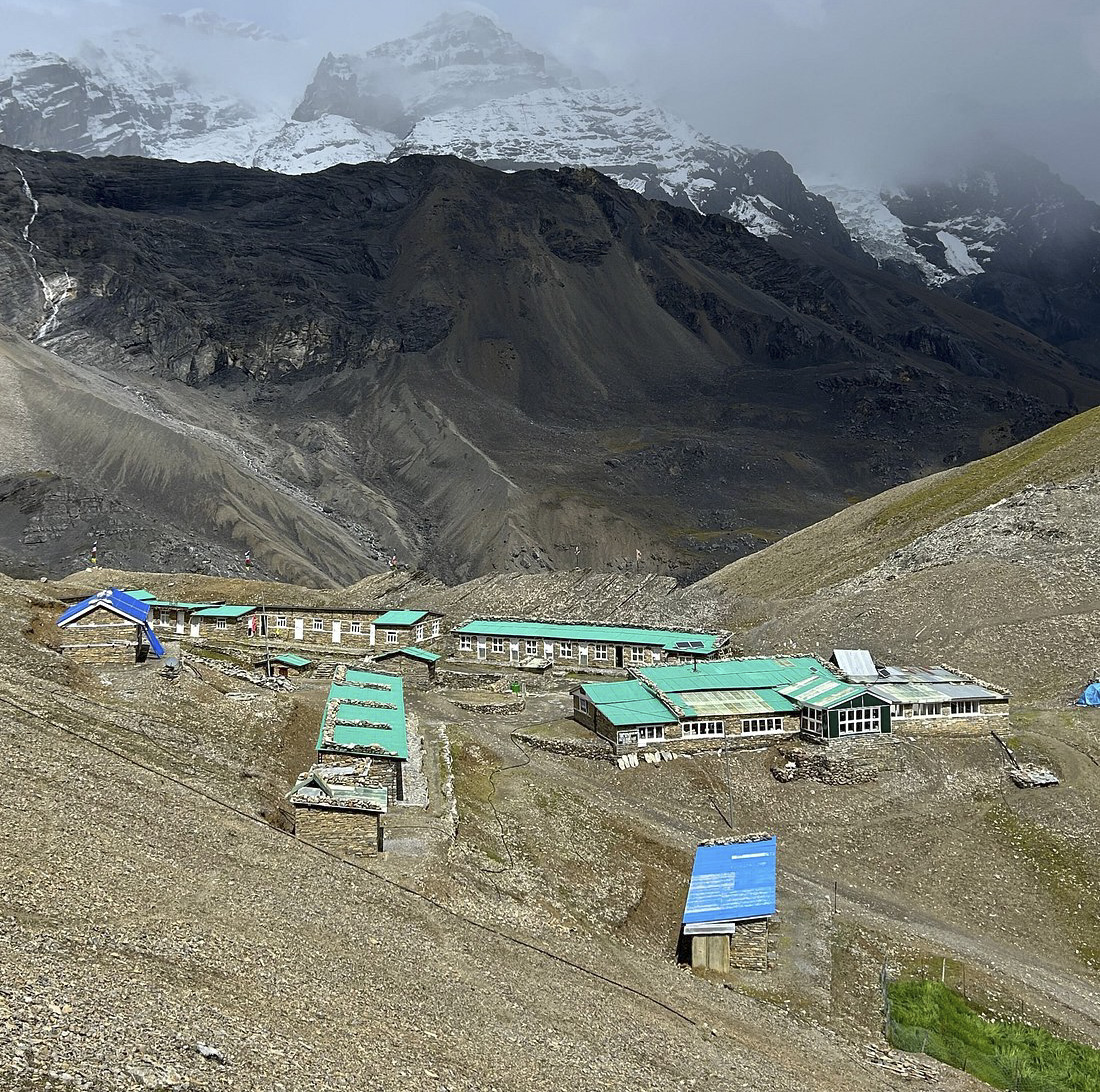
Traditionally, trekkers started in Besisahar and walked the entire loop, but with road construction creeping further into the lower valleys over the last decade, most people now start a bit higher up, around Syange, Jagat, or Dharapani, to skip some of the dustier, jeep-heavy sections. From there, the trail follows the Marsyangdi River upstream through a steadily rising series of villages - Tal, Chame, Pisang, Manang - each one noticeably different from the last as you climb out of subtropical forest and into high alpine terrain.
Manang is where most people pause for a couple of nights. Sitting around 3,500 meters, it's become the unofficial acclimatization hub of the trek, and for good reason. Push too fast toward the pass without giving your body time to adjust, and altitude sickness will end your trek far more effectively than any injury could. From Manang, the trail climbs through smaller settlements like Yak Kharka and Thorong Phedi before the big push over Thorong La itself.
Crossing the pass is, without question, the trek's defining day. Most people start well before sunrise, sometimes as early as 3 or 4 a.m., to avoid the fierce winds that tend to pick up by midmorning. It's a long, cold, lung-burning climb, and the summit - marked by a chaotic tangle of prayer flags - doesn't reward you with comfort so much as with a kind of stunned disbelief that you actually made it. The descent down the other side into Muktinath, a sacred site for both Hindus and Buddhists, is steep and knee-punishing, but it also marks a shift into the Mustang region, with its dramatic, wind-carved cliffs and markedly different atmosphere.
From Muktinath, trekkers usually continue down through Jomsom, Marpha (famous for its apple orchards and, unofficially, its apple brandy), and onward toward Tatopani, known for its natural hot springs - a genuinely well-earned reward after days of sore legs. Many people end their trek around Ghorepani , adding on a side trip to Poon Hill for one of the best sunrise panoramas of the Annapurna and Dhaulagiri ranges anywhere in Nepal, before descending to Nayapul and the road back to Pokhara.
Best Time to Go
Timing matters a lot on this trek, more than on some of the shorter, lower-altitude routes in Nepal. The two main windows are spring (March to May) and autumn (September to November).
Autumn tends to be the more popular choice, and honestly, it's hard to argue with it. The monsoon has just cleared the air, skies are consistently sharp and clear, and the mountain views are about as good as they get. It's also peak season, though, which means busier teahouses and more trekkers on the trail, especially around Manang and Thorong La.
Spring has its own appeal. Rhododendron forests bloom in vivid reds and pinks lower down on the trail, temperatures are a bit milder, and the crowds thin out slightly compared to autumn. Winter trekking is possible on the lower sections, but Thorong La often closes due to snow, so it's not the season to attempt the full circuit. Monsoon season, from June to August, is generally best avoided altogether - not just for the rain, but for the leeches, landslides, and socked-in views.
Permits and Practical Matters
Nepal requires two permits for this trek: the Annapurna Conservation Area Permit (ACAP) and the Trekkers' Information Management System (TIMS) card. Both are usually arranged in Kathmandu or Pokhara, and independent trekkers can generally get them without too much hassle, though rules around solo trekking without a guide have shifted in recent years, so it's worth checking current requirements before you go.
As for whether you need a guide or porter, that's more a matter of preference than necessity. The trail is well-marked, and teahouses line the route at fairly consistent intervals, so navigation isn't usually the issue. That said, having a guide can make the cultural side of the trek richer, and a porter can make the physical side considerably kinder to your knees, especially given how much elevation you gain and lose.
When you go on the trek with us, we look after everything that you need for this adventure.
Life on the Trail
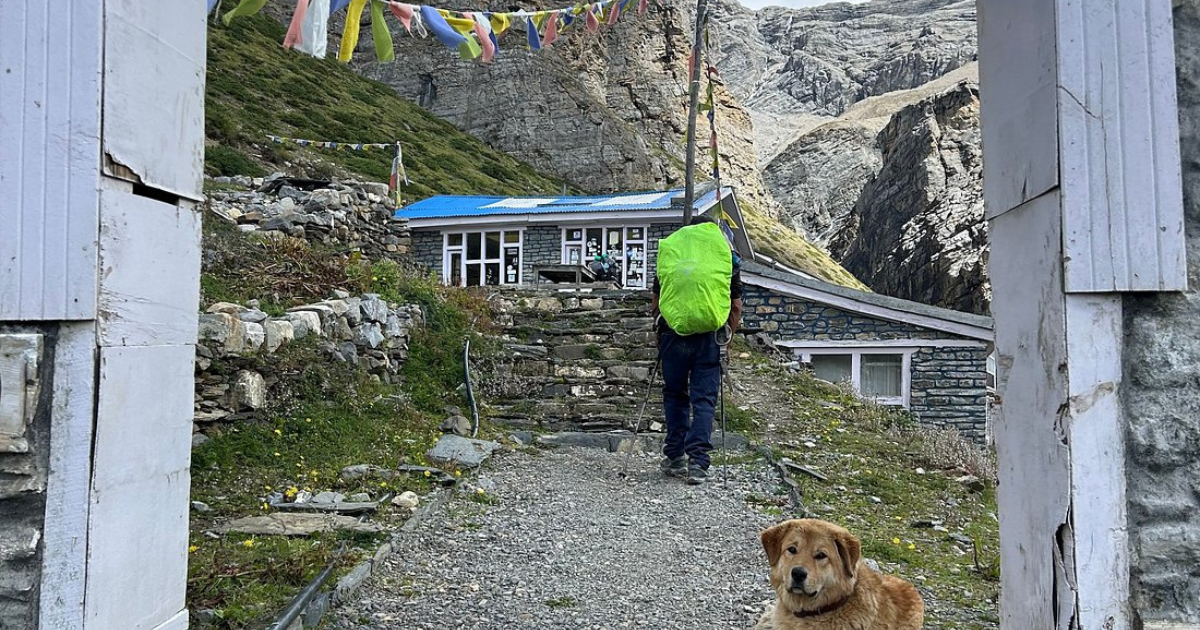
One of the underrated joys of the Annapurna Circuit is the teahouse system itself. Unlike treks that require camping and carrying your own food, this route is dotted with family-run lodges offering a bed, a hot meal, and usually a wood stove to huddle around once the sun drops and the temperature follows it. Dal bhat - the ubiquitous Nepali plate of lentils, rice, and vegetables - becomes something close to a religious ritual by the end of the trek, mostly because it's the one dish that seems to reliably refuel tired legs day after day.
The social side of teahouse trekking is worth mentioning too. Long dinners around a shared stove, comparing notes on altitude headaches or swapping stories about where people are from, become as much a part of the experience as the scenery. It's a strange kind of intimacy that develops among strangers who happen to be attempting the same absurd, wonderful thing at the same time.
Is it a difficult trek?
Physically, yes, it's demanding - long days, significant elevation change, and a high pass that tests your lungs regardless of how fit you are. But it's not a technical climb. No ropes, no crampons, no specialized mountaineering skill required. What it does require is patience with the acclimatization process, decent trekking fitness, and a willingness to take altitude sickness seriously rather than push through it out of stubbornness.
The Annapurna Circuit isn't just a trekking adventure you do to check a box. It's a trek you do because you want to feel the ground change under your feet, day by day, from rice paddies to high desert to a pass so high the wind seems personally offended by your presence. It's long, it's occasionally brutal, and it's absolutely worth every blister. Most people who finish it don't talk about wanting to do it again so much as they talk about missing it - which, for a multi-week walk through the Himalayas, might be the highest compliment there is.
Let us know if you want to go on an Annapurna Circuit Trekking Adventure.
Need Help? Call Us+977 9856073085orChat with us on WhatsApp
Latest Travel Blogs
Oct 12, 2026By ABC
Why Trek to Everest Base Camp in 2027: 10 Reasons to Go
Oct 06, 2026By ABC
Trekking the Annapurna Circuit in September
Need Help? Call Us.+977 9856073085