
Trekkers and guides in the Khumbu region often say November is their favorite month. It arrives just after the monsoon and before winter, marking the height of Nepal's autumn trekking season. Trails are dry, skies are clear, and the mountains stand out in full view. If you are planning the Everest Base Camp (EBC) Trek, November gives you a rare combination of comfort, safety, and breathtaking scenery that is tough to match at other times.
Everest Base Camp Trek in November: A Complete Guide
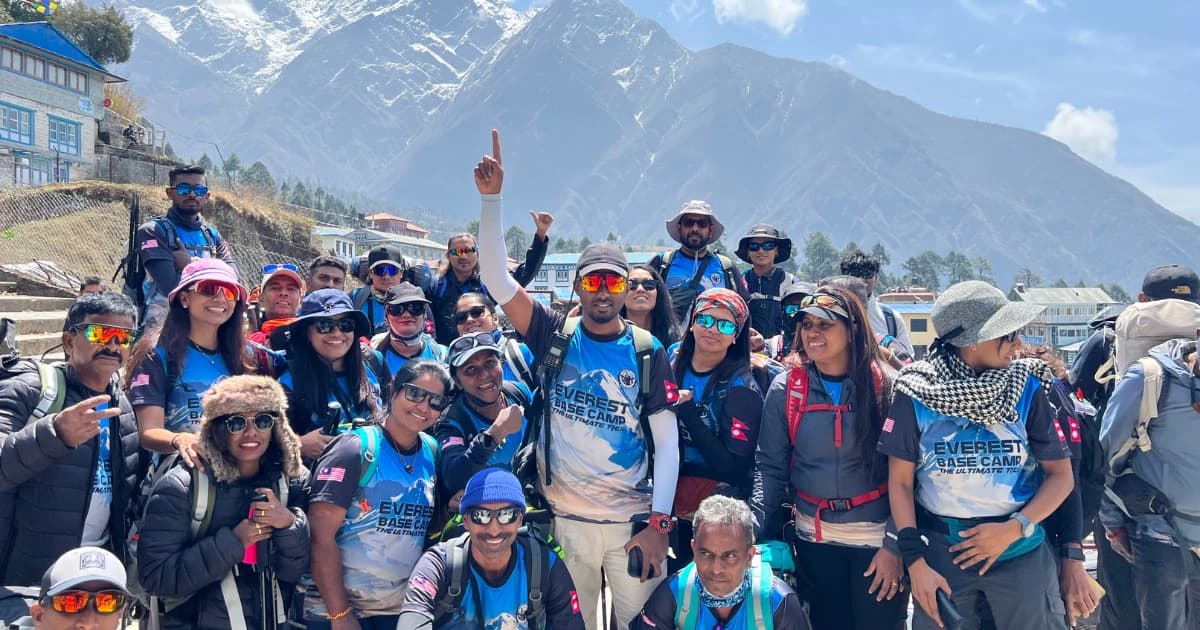
This guide will help you know what weather to expect on the EBC Trek in November. It shares temperature ranges for areas below and above Namche Bazaar, talks about visibility, and explains why so many trekkers pick this month.
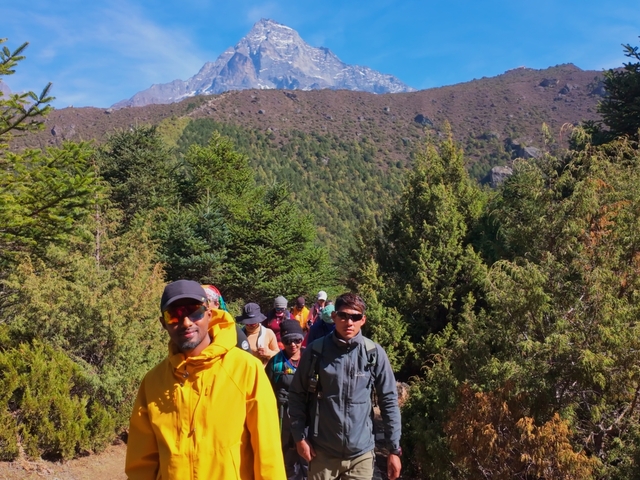
Weather Conditions in Everest in November
By November, the monsoon clouds that cover Nepal from June to September have cleared. This brings dry and steady weather for most of the month. That is why November is known as the "post-monsoon" or "autumn" season, and many consider it the best time for high-altitude trekking in the Everest region .
Most days in November are clear and sunny, especially in the first half of the month. Rain is uncommon, and if it does happen, it is usually just a bit of light snow at higher elevations. Winds are gentler than in winter, but afternoons can still get chilly once the sun dips behind the mountains.
As November goes on, temperatures drop because winter is approaching. Early in the month is warmer, thanks to leftover heat from October, but late November gets much colder, especially after dark. Some trekkers pick the first half for milder weather, while others like the second half for fewer crowds and even clearer air, even though nights are colder.
Humidity stays low all month, so trails are dry, there are fewer leeches at lower elevations, and trekking is more comfortable overall. Dry paths, steady weather, and mild daytime temperatures make November one of the most reliable times to trek in the Everest region.
Daytime and Nighttime Temperatures below Namche Bazar
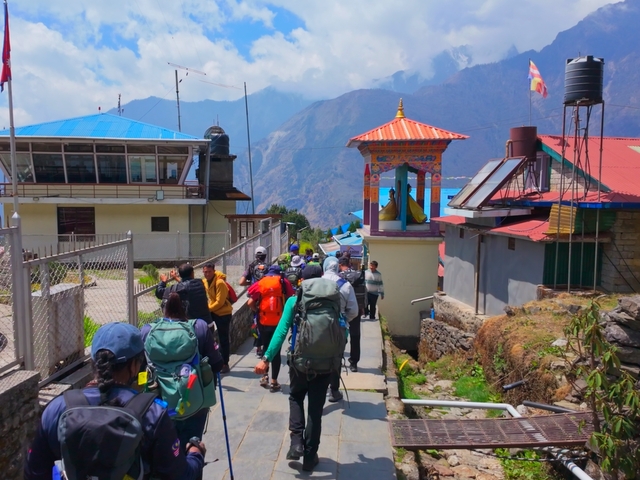
The lower section of the Everest Base Camp Trek, from Lukla through villages like Phakding, Monjo, and up to Namche Bazar (about 2,800 to 3,440 meters), has the mildest temperatures along the route. This part of the trek takes you through forests, over suspension bridges, and past terraced farmland. Even in late autumn, it still feels fairly warm here.
The temperatures below Namche Bazar are usually between 12°C and 18°C (54°F to 64°F). In the sun, it can feel even warmer, so many trekkers are comfortable in light layers, sometimes just a t-shirt or thin fleece. The forests of rhododendron and pine also help block the wind, making hiking even.
At night, temperatures drop sharply, which is typical in the mountains. Nighttime below Namche Bazar are usually between 0°C and 8°C (32°F to 46°F), depending on elevation, cloud cover, and the time of month. Teahouses here are warmer and cozier than those higher up, often using wood-burning stoves in the dining rooms. This keeps evenings comfortable even without heavy-duty gear.
This part of the trek is great for acclimatization. The temperature changes are clear but not too harsh, so trekkers can adjust to high altitude without facing extreme cold. That is why the early days of the Everest Base Camp Trek in November are comfortable, even for beginners.
Daytime and Nighttime Temperatures above Namche Bazar
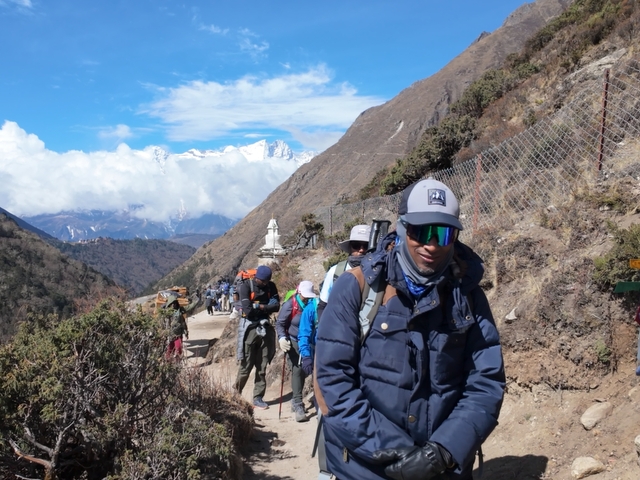
After Namche Bazar, as you head towards Tengboche, Dingboche, Lobuche, Gorak Shep, and Everest Base Camp (from about 3,860 to 5,364 meters), the weather shifts a lot. Trees disappear, the landscape turns rocky with alpine plants, and the thinner air means temperatures can change quickly from day to night.
Temperatures range from 3°C to 12°C (37°F to 54°F), warmer at lower spots like Tengboche and colder near Gorak Shep and Base Camp. Direct sunlight can still make daytime hiking pleasant, and many trekkers take off outer layers while climbing under a clear sky. But when clouds appear or the trail moves into shade, the temperature can drop quickly.
At night, the real cold begins. Above Namche Bazar, nighttime temperatures often drop between -5°C and -15°C (23°F to 5°F). Near Everest Base Camp, especially in late November, lows can reach -15°C to -20°C (5°F to -4°F) or even colder on clear, windless nights. Clear skies are great for views, but without clouds to hold in heat, the coldest nights often offer the best stargazing and mountain scenery.
That is why proper high-altitude gear is essential above Namche Bazar. You will need a four-season sleeping bag rated for sub-zero temperatures, insulated jackets, thermal base layers, and a reliable headlamp for early starts. Most teahouses at these heights have basic heating in the dining hall during the evening, but bedrooms are usually unheated. Warm sleepwear and a good sleeping bag make a big difference in comfort.
How Clear the View is in Everest in November
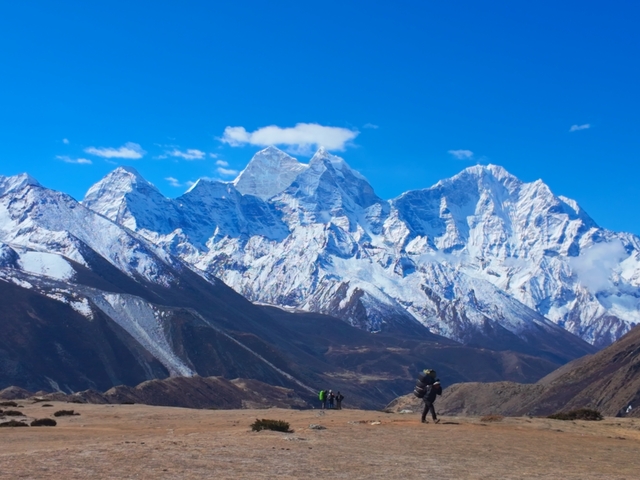
One of the main reasons trekkers choose the Everest region in November is the visibility. This month often brings some of the clearest skies all year, thanks to the dry post-monsoon air and less dust and haze than in spring or before the monsoon
Mornings are usually crystal clear, offering open views of Everest, Lhotse, Nuptse, Ama Dablam, and other nearby peaks from many spots along the trail. Popular viewpoints like the Everest View Hotel above Namche Bazaar, Tengboche Monastery, and Kala Patthar near Gorak Shep often provide postcard-worthy panoramas during this time, with very few clouds.
In the afternoons, some clouds may gather around the highest peaks, which is normal in mountain areas. However, this rarely leads to much rain or lasting overcast skies. By evening, the skies usually clear again, giving you some of the best stargazing of the year thanks to low humidity and little light pollution at high altitude.
This clear weather is not just about great views. Clear skies also make trekking and flying safer. Flights between Kathmandu and Lukla, which often face delays or cancellations in cloudier months, are much more reliable in November. For trekkers with limited vacation time, this reliability can be a key reason to choose this month to go.
Why the Everest Base Camp Trek in November is a Great Idea
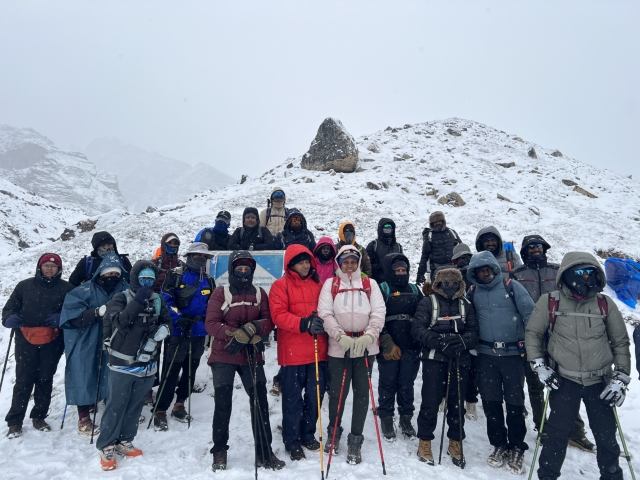
When you add up all these factors, it is easy to see why November is so popular with both experienced trekkers and first-time visitors alike.
First, the weather is just right. It is cold enough to keep the trails dry and firm, but not as harsh as the deep winter that comes in December and January, when high passes can get dangerously cold and some teahouses close. Daytime hiking stays comfortable on most of the route, as long as you wear the right layers at higher elevations.
Second, visibility in November is probably the best all year. Anyone who has trekked to Everest Base Camp knows the main reward is the view, and November gives you some of the most reliable, clear sights of Everest and its neighboring peaks you will find in any season.
Third, flights to and from Lukla are much more reliable than during the cloudier monsoon and early autumn months. This reduces stress and helps you avoid the travel delays that can trouble trekkers in less stable weather. This means trekkers can still enjoy the benefits of autumn weather while avoiding some of the densest teahouse bookings and trail congestion seen during the high season's busiest weeks, particularly if trekking in the latter half of the month.
Finally, the Khumbu region in November has a truly special atmosphere. The mountains glow with golden late-autumn light, quiet monasteries like Tengboche are draped in prayer flags, and star-filled night skies over Base Camp create the kind of experience many trekkers dream of when they picture walking toward the world's tallest mountain.
For all these reasons, November is one of the best and most rewarding times to trek to Everest Base Camp. With good preparation, the right gear for both the mild lower valleys and the cold high-altitude nights, and realistic expectations about changing temperatures, you can enjoy a journey filled with clear skies, manageable weather, and unforgettable views at every step.
Need Help? Call Us+977 9856073085orChat with us on WhatsApp
Latest Travel Blogs
Oct 06, 2026By ABC
Trekking the Annapurna Circuit in September
Oct 04, 2026By ABC
Annapurna Circuit Trek in 2027
Oct 01, 2026By ABC
Mardi Himal Trek in May: A Short Hike into the Clouds
Need Help? Call Us.+977 9856073085