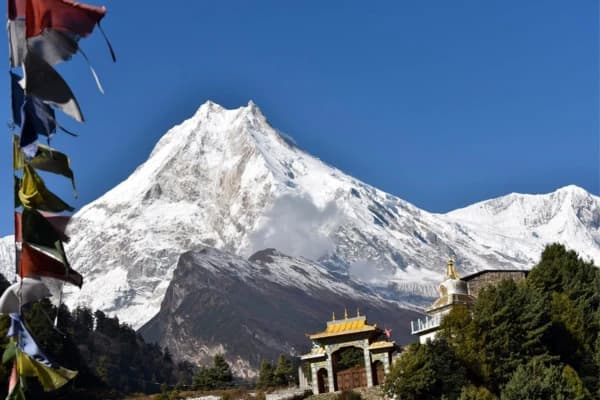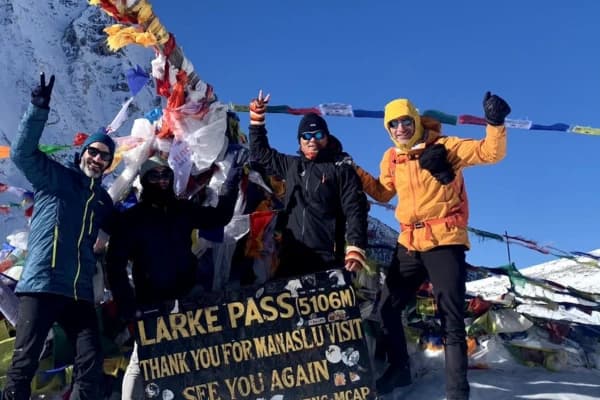
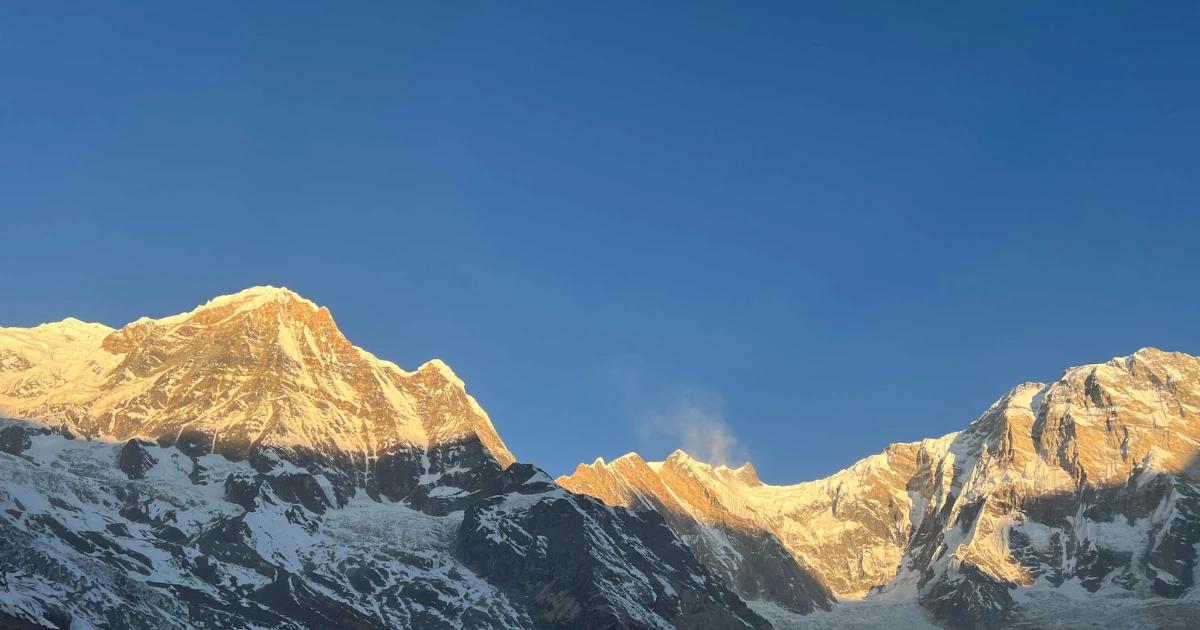
If you’ve spent any time researching Nepal treks, you’ve probably noticed that Ghorepani Poon Hill and Annapurna Base Camp (ABC) keep showing up side by side. Some itineraries mention both in the same breath, and some as a package. It’s no wonder many first-time trekkers ask: are they actually the same route?
The short answer is no, but they’re closely connected. They are two distinct treks that share the same region, the same starting area and, in some itineraries, even a few of the same trails. Understanding how they relate will help you choose the right adventure, or combine both into one unforgettable journey.
Let us give you some details about these two wonderful treks.
The Short Answer: Two Treks, One Spectacular Region
Both treks lie within the Annapurna Conservation Area in north-central Nepal and begin from the Pokhara side of the range. Beyond that, they are separate trips with different goals.
- Ghorepani Poon Hill is a short, scenic trek built around one famous sunrise viewpoint at 3,210 metres.
- Annapurna Base Camp is a longer, higher expedition that takes you deep into a glacial amphitheatre at 4,130 metres, surrounded by towering peaks.
Think of Poon Hill as a beautiful appetizer and ABC as the main course. Plenty of trekkers enjoy both, but they aren’t interchangeable.
What is the Ghorepani Poon Hill Trek?
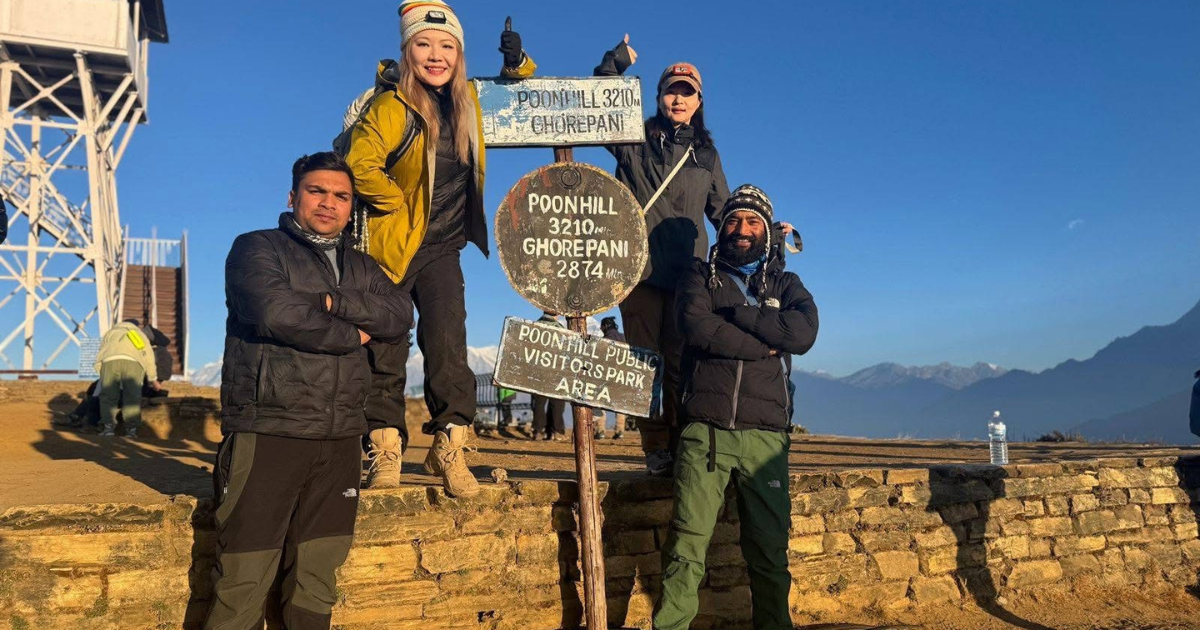
The Ghorepani Poon Hill trek is one of Nepal’s most beloved short treks, and for good reason. It usually takes four to five days, which makes it ideal if you have limited time, are new to trekking, or want a taste of the Himalayas without a punishing itinerary. A typical route goes from Pokhara to Nayapul by road, then on foot through Tikhedhunga and Ulleri to Ghorepani. Along the way you climb a famous stone staircase through terraced farmland, then walk into rhododendron forests that glow red and pink in spring.
Villages like Ghorepani feel warm and lived-in, with teahouses where you can sit with a cup of milk tea and watch clouds roll over the ridgelines.
The highlight comes before dawn. You wake in the dark, pull on a headlamp, and hike about an hour up to Poon Hill. As the sun rises, the whole horizon lights up: Dhaulagiri, Annapurna South, Machapuchare (Fishtail) and more. It’s the kind of morning people remember for years.
After sunrise, most trekkers descend via Tadapani and Ghandruk, a beautiful Gurung village, before heading back toward Nayapul and Pokhara.
What is the Annapurna Base Camp Trek?

The Annapurna Base Camp trek is a different level of commitment. It typically takes six to eleven days, depending on your starting point, route, pace and acclimatization plan. The reward is walking right into the heart of the Annapurna Sanctuary, a high basin ringed by some of the tallest mountains on Earth.
From Nayapul the route climbs through Ghandruk, continues to Chhomrong, and then follows the Modi Khola valley upward. The scenery changes dramatically as you go: terraced fields give way to bamboo forest, then to alpine meadows, then to stark glacial moraine. Beyond Himalaya and Deurali, you reach Machapuchare Base Camp (3,700 metres) and finally Annapurna Base Camp itself.
Standing at ABC, you’re surrounded by Annapurna I, Annapurna South, Hiunchuli, Gangapurna and Machapuchare. The scale is humbling, and the silence at dawn is unforgettable. But it’s also a serious high-altitude trek, which brings real challenges like altitude sickness risk, colder nights and tougher days.
Where the Two Routes Overlap
Here is where the confusion comes from. The two treks aren’t identical, but the trails do cross paths in a few places.
Both treks begin the same way, with a drive from Pokhara to Nayapul or a nearby trailhead. From there, the paths split depending on the itinerary:
The classic ABC route heads up via Ghandruk and Chhomrong, which means it passes through Ghandruk but skips Ghorepani and Poon Hill entirely.
The classic Poon Hill route goes up to Ghorepani first, then loops back via Tadapani and Ghandruk.
So the main point of overlap is Ghandruk, plus occasional shared trail sections near the start. The real connection lies in the fact that you can link the two treks, which is where many travellers get the idea they’re one route.
Can you combine Poon Hill and Annapurna Base Camp?
Yes, and it’s a popular choice. A combined itinerary lets you enjoy the sunrise at Poon Hill and then continue to Annapurna Base Camp in a single, longer journey.
In a typical combined trek, you start with the Poon Hill climb, then cross to Tadapani and drop to Chhomrong, where you join the main ABC trail. From there you continue up through Himalaya and Deurali to Machapuchare Base Camp and ABC, then descend by a similar or slightly different route.
The combined trek usually takes nine days and more of trekking. It’s a beautiful way to see the region’s full range of landscapes, from sub-tropical forest to glacier-fed valleys. It also gives your body more time to adjust before reaching higher altitudes, which makes the combination safer for many people than rushing straight up.
Key Differences at a Glance
If you’re deciding between them, these are the differences that matter most:
- Duration: Poon Hill takes four to five days. ABC takes seven to twelve, or more if combined.
- Altitude: Poon Hill reaches 3,210 metres, while ABC reaches 4,130 metres. That extra altitude changes how your body feels, especially on the last day or two.
- Difficulty: Poon Hill is moderate and well suited to beginners with reasonable fitness. ABC is more demanding, with longer days, steeper stretches and colder conditions near the top.
- Scenery: Poon Hill offers panoramic sunrise views and lush forest. ABC offers closer, more dramatic, immersive mountain scenery.
- Experience: Poon Hill feels like a gentle introduction to Himalayan trekking. ABC feels like a true expedition.
Which Trek is Right for You?
Your choice mostly depends on three things: time, fitness and what kind of experience you want.
If you only have a short holiday, Poon Hill is a wonderful choice. It delivers big views and a real taste of village life without a huge time commitment. It also suits families, first-time trekkers and anyone nervous about altitude.
If you have ten days or more and decent fitness, ABC is hard to beat. It’s more physically demanding but also more rewarding, with the feeling of walking into the mountains rather than just viewing them from a distance.
If you want the best of both, a combined itinerary gives you the sunrise views and the base camp experience, though you’ll need the extra days and stamina.
Best Time to Trek
The two best seasons for both routes are spring (March to May) and autumn (October to November). Spring brings rhododendron blooms and warm days, while autumn offers crisp, clear skies and excellent mountain visibility.
Winter trekking is possible on the lower Poon Hill route, though it’s cold and snow can block higher trails. The monsoon months (June to August) bring heavy rain, leeches on the lower trails and cloudy views, so most trekkers avoid them.
Permits and Practical Planning
Both treks require permits for the Annapurna Conservation Area. Permit requirements and fees can change, so check current rules with a registered trekking agency or the Nepal Tourism Board before you go. Carrying your passport and a few passport-sized photos will make the process smoother.
You can trek independently or with a guide or porter. A guide is especially useful on the ABC route, where weather, altitude and trail conditions can shift quickly. Teahouses line both routes, offering simple rooms and hot meals, so you don’t need to carry a tent or cooking gear.
A few tips worth remembering:
- Pack in layers, since mornings are cold and afternoons can be warm.
- Bring a good headlamp for the Poon Hill sunrise hike.
- Drink plenty of water and walk slowly at altitude.
- Carry some cash, because ATMs disappear once you leave the main towns.
- Don’t rush acclimatisation. A rest day is better than a ruined trip.
So, are Ghorepani Poon Hill and Annapurna Base Camp on the same trekking route? Not exactly. They are two separate treks that share a region, a starting point and, in some cases, a few common trails. You can enjoy either on its own, or link them for a longer and richer journey.
If you want a short, sunrise-focused adventure, choose Poon Hill. If you want a deeper, higher and more challenging trek into the heart of the Annapurna Sanctuary, choose ABC. And if you can spare the time, doing both gives you a front-row seat to everything this part of Nepal has to offer.
Whichever you choose, you’ll walk through living villages, forests, mountain light and the kind of quiet that’s hard to find anywhere else. Lace up your boots, start planning, and let the Annapurna region do the rest.