
The first time you hear about the Mardi Himal trek, you must be wondering what it is like. And if you are planning a trek to Nepal, this can be a perfect fit for you. A short trek in the Annapurna region, this adventure gives you a wonderful experience that you will cherish for life. Here we talk about why you should trek to Mardi Himal.
Here is why you should trek to Mardi Himal

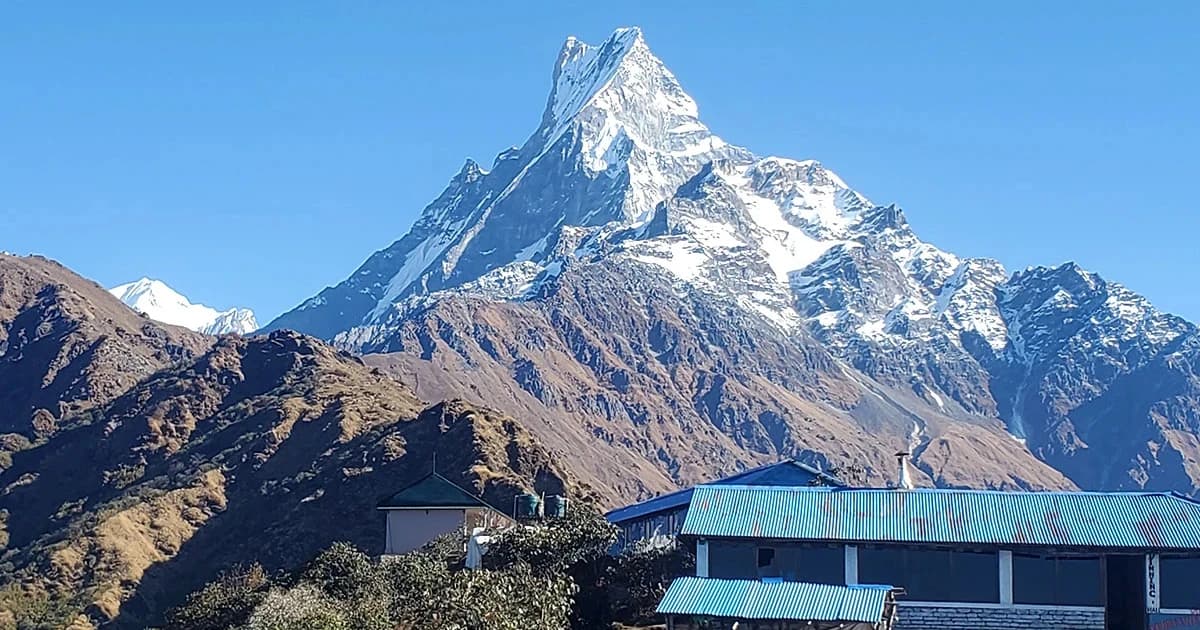
You get Absurdly Close to Machhapuchhre
Most people come to the Annapurna region to see Machhapuchhre, the fishtail-shaped peak that shows up on every postcard in Pokhara. On most trails, you see it from a distance, framed by other ridges, sharing the skyline with half a dozen peaks.
On Mardi Himal, you walk straight at it. The whole trek is a slow climb up a single ridge that runs toward the mountain's southern face, and by the time you reach High Camp, Machhapuchhre is not part of the view. It is the view. It fills the entire window of your teahouse dining room. It's the first thing you see when you unzip your sleeping bag at five in the morning and the last thing that catches light in the evening.
Machhapuchhre has never been officially summited. It's closed to climbers because it's sacred to the local Gurung communities. There's something in standing at 4,500 metres under a peak nobody has ever stood on top of. It stays untouched, and you're just a visitor at the bottom of it.
It fits into a short Holiday
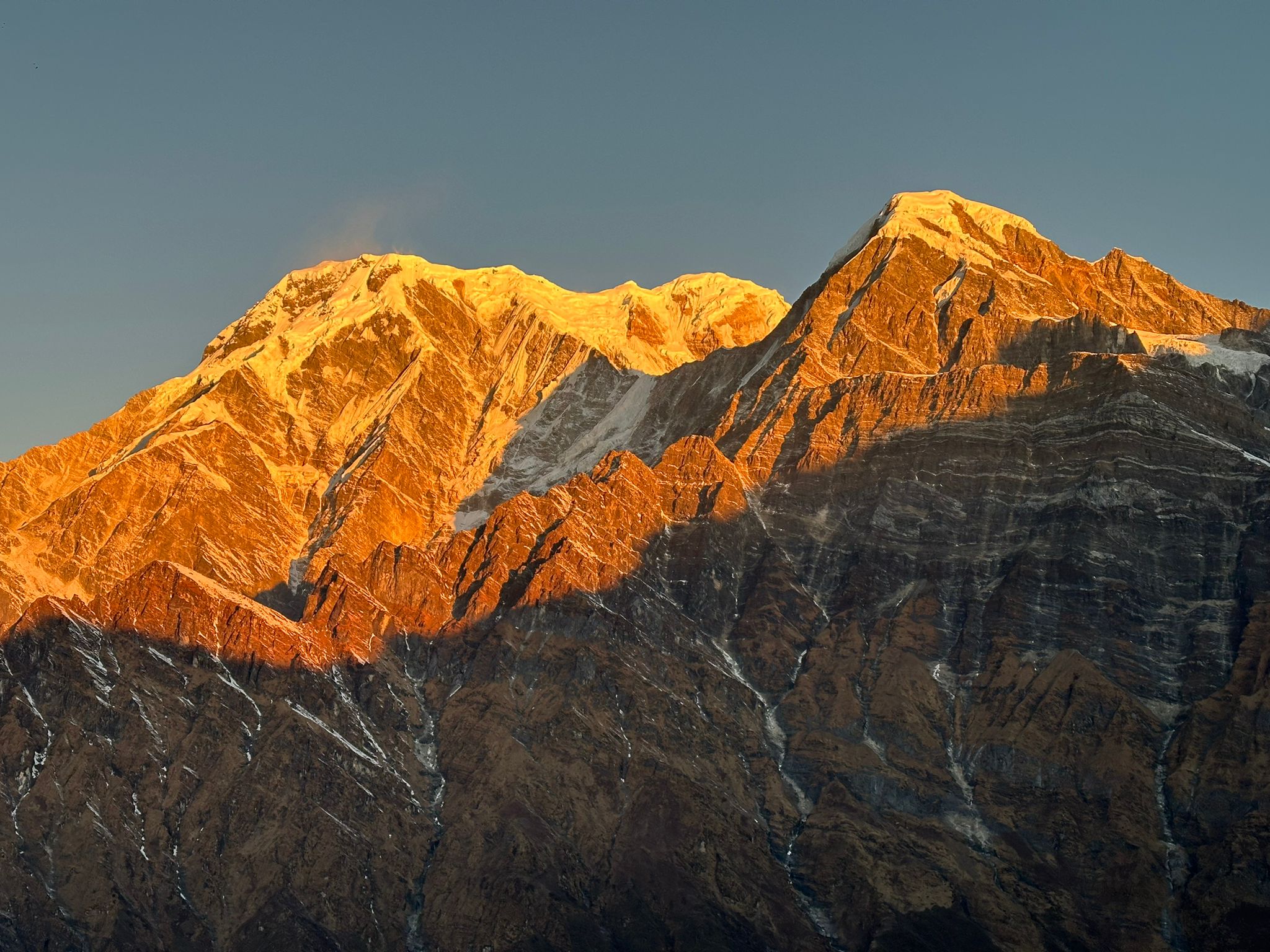
This is the practical reason, and for a lot of people it's the deciding one. Mardi Himal takes four to six days from trailhead to trailhead. Add a day either side for travel from Kathmandu, and you can do the whole thing inside a week.
Compare that with Annapurna Base Camp, or Everest Base Camp at fourteen. Most of us don't have two weeks, and the flexibility that comes with flight delays and weather holds. Mardi gives you genuine high-altitude Himalayan scenery without asking you to quit your job.
The trailhead is also close. Kande is roughly an hour's drive from Pokhara, which means you're walking by mid-morning on day one instead of losing a day to a jeep ride.
The Trail is Still Quiet
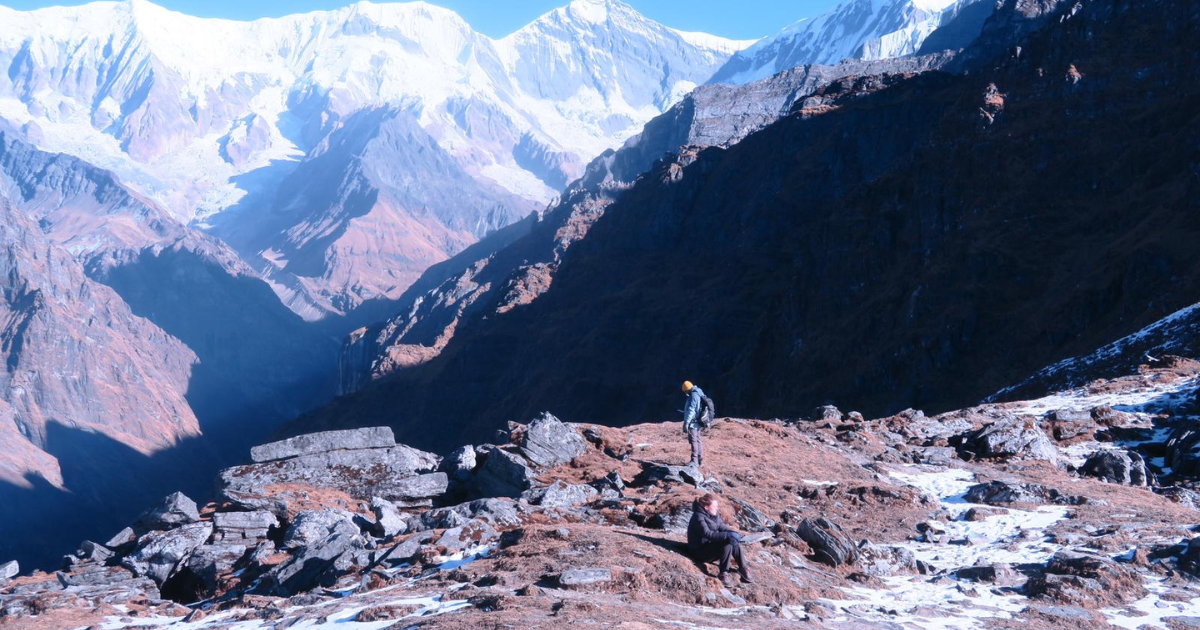
Mardi Himal only opened as an official trekking route in 2012, which makes it an infant compared with the Annapurna Circuit . Word has spread since then, and it's no longer a secret, but it still carries a fraction of the traffic of Poon Hill or ABC.
What that means in practice: you're not queuing on staircases. You're not sharing a viewpoint with two hundred people at sunrise. On my second morning, I walked for close to two hours through forest without seeing another person, and the only sound was my own boots and something large moving through the rhododendrons that I chose not to investigate. Teahouses are smaller here. Ten or twelve rooms rather than forty. You end up eating dinner with the same six people every night, and by High Camp you know where they're from and why they came.
The Forest is Half the Reason to Go
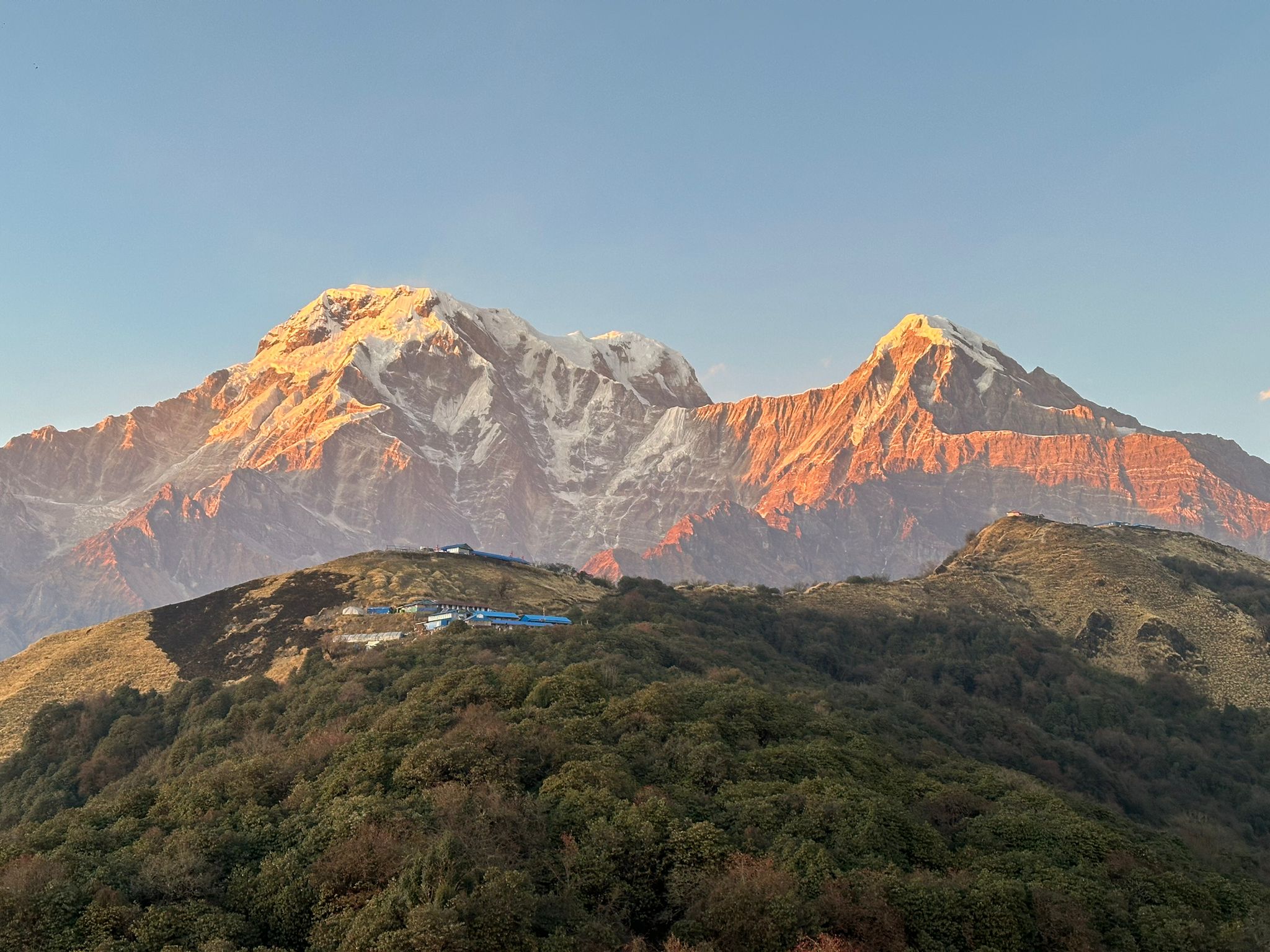
People talk about Mardi Himal for the mountain views, and then they get to the forest and stop talking about anything else for a while.
The first two days climb through old rhododendron and oak woodland thick with moss. Everything is draped. Branches hang with lichen, the trail is soft with leaf litter, and light comes down in shafts. If you're there in late March or April, the rhododendrons are in bloom, and the whole hillside turns red and pink and white. Nepal's national flower, in bulk, at eye level.
There are birds everywhere. Danphe, the iridescent Himalayan monal, turn up regularly near Low Camp, and the forest is loud with things you can hear but never see. Red pandas live in this belt too. I didn't see one. Almost nobody does. But knowing they're there changes how you walk.
Then the forest stops. Somewhere above Low Camp the trees thin into low shrubs and then into open alpine grass, and the ridge opens up on both sides. That transition, from enclosed green tunnel to wide sky in the space of an hour, is one of the best moments in Nepali trekking.
It's Manageable, But Don't Underestimate it
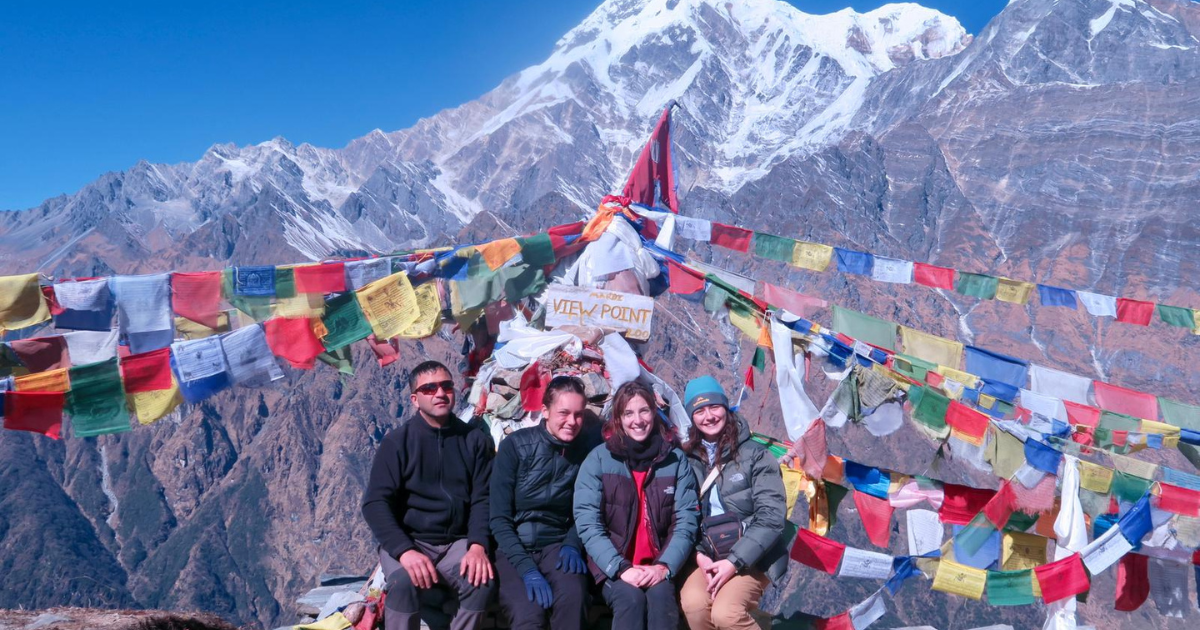
Mardi Himal is graded moderate, and that's fair. There's no technical ground, no ropes, no glacier travel. If you can walk five to six hours a day on uneven terrain, you can do this.
That said, two things catch people out.
The first is the altitude. The Upper Viewpoint sits at about 4,500 metres, and the trek gains height quickly because the ridge is steep. Altitude sickness doesn't care how fit you are. Drink far more water than feels necessary, walk slower than you want to, and take the extra night at Low Camp or Badal Danda if your head starts aching.
The second is the descent. The way down from High Camp to Siding village is long, steep, and relentless on the knees. Trekking poles are not optional here unless your joints are younger than mine.
The Timing is Flexible
Spring, from March to May, gives you rhododendron blooms, warmer nights, and generally stable weather. Autumn, from late September through November, gives you the clearest skies of the year and the sharpest mountain views, though the teahouses are fuller.
Winter is possible on Mardi in a way it isn't on higher routes. December and January can be stunningly clear, with snow on the upper ridge, as long as you're prepared for genuinely cold nights and the possibility that High Camp is closed. Avoid the monsoon from June to August. The views vanish, the trail turns to mud, and the leeches arrive in force.
Need Help? Call Us+977 9856073085orChat with us on WhatsApp
Latest Travel Blogs
Oct 26, 2026By ABC
Kailash Manasarovar Yatra 2027 Preparation Guide
Oct 12, 2026By ABC
Why Trek to Everest Base Camp in 2027: 10 Reasons to Go
Need Help? Call Us.+977 9856073085