
Manaslu doesn't get talked about the way Everest or Annapurna does, and honestly, that's part of the appeal. If you go in May, you'll spend most days on a trail that feels more like a walk through someone's actual life - mule trains, kids on their way to school, prayer flags snapping in the wind - than a highlight reel of a "bucket list trek." Here's what to actually expect if you're trekking around Manaslu, the eighth-highest mountain in the world, in May.
What Trekking around Manaslu is Really Like in May
Why May is so ideal for trekking around Manaslu
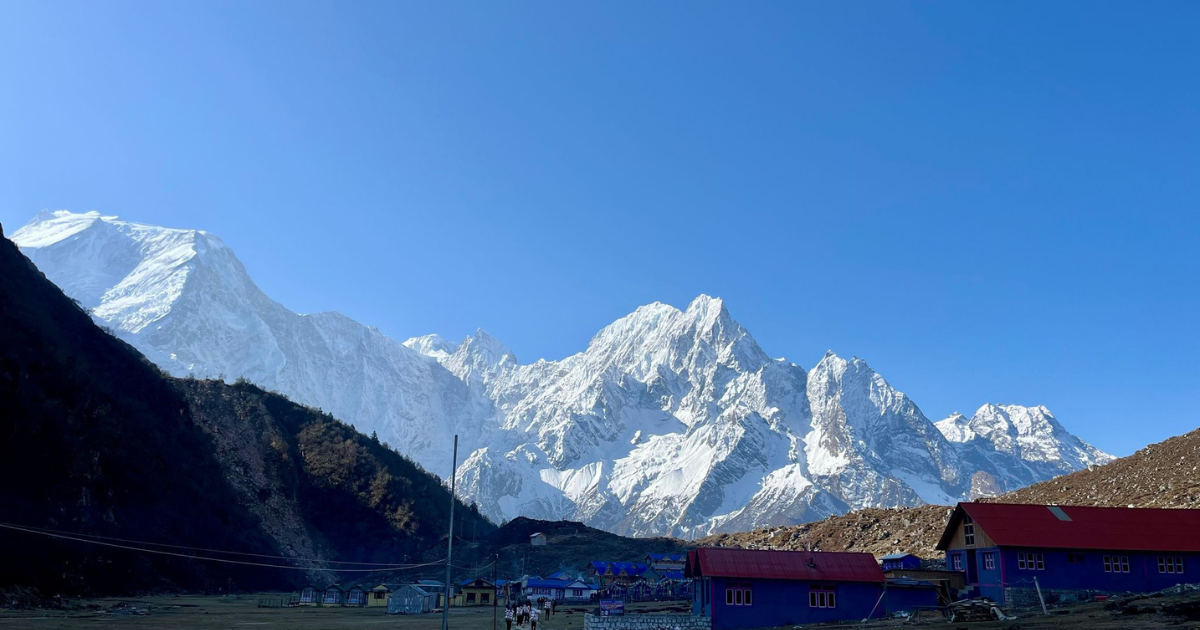
May sits right at the edge of Nepal's pre-monsoon window, and that timing matters more than people expect. The brutal cold of winter has burned off, the trails are mostly clear of snow up to fairly high elevations, and the monsoon clouds haven't rolled in yet to swallow the views. Mornings are crisp and clean, skies are often blindingly blue, and you get long daylight hours to actually enjoy it - sunrise creeps in before 5 am, and you're not racing darkness by 5 pm like you would in November .
It's also just a more comfortable month to walk in. You're not layering up like a Michelin man at breakfast only to be sweating through your base layer by 10 am. Days are warm enough at lower elevations that a light fleece does the job, and it's only once you're pushing toward Samagaon and beyond that the mountain air really starts to bite.
The Lower Trail: Green, Humid, and Full of Life
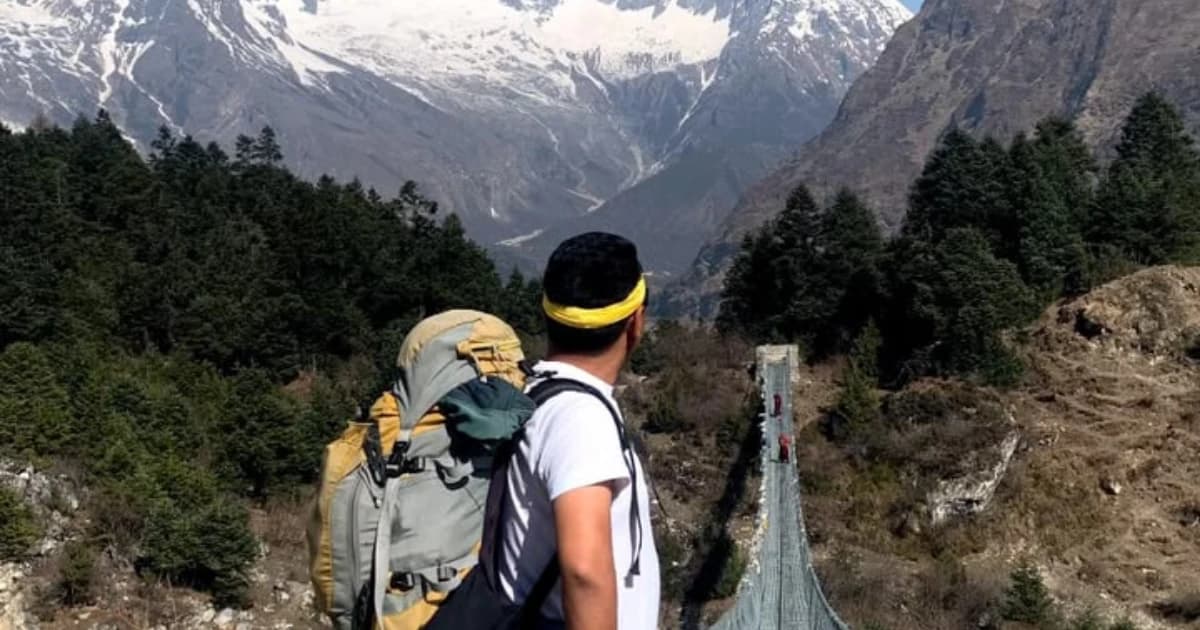
The trek starts low - really low, down in the Budhi Gandaki river gorge - and in May this stretch is lush in a way that catches people off guard. They picture the Himalayas as barren and rocky, but the first few days wind through terraced rice paddies, banana trees, and thick forest clinging to near-vertical cliffsides. The river itself is a constant companion, churning a milky turquoise below suspension bridges that sway just enough to keep your attention.
It's humid down here, and you'll feel it. Expect some sweat, the occasional leech if it's rained recently, and villages that smell like woodsmoke and cooking dal. This isn't the postcard mountain scenery yet - it's the part of the trek that quietly earns your respect for the terrain before the "wow" moments start.
Rhododendrons in Full Bloom
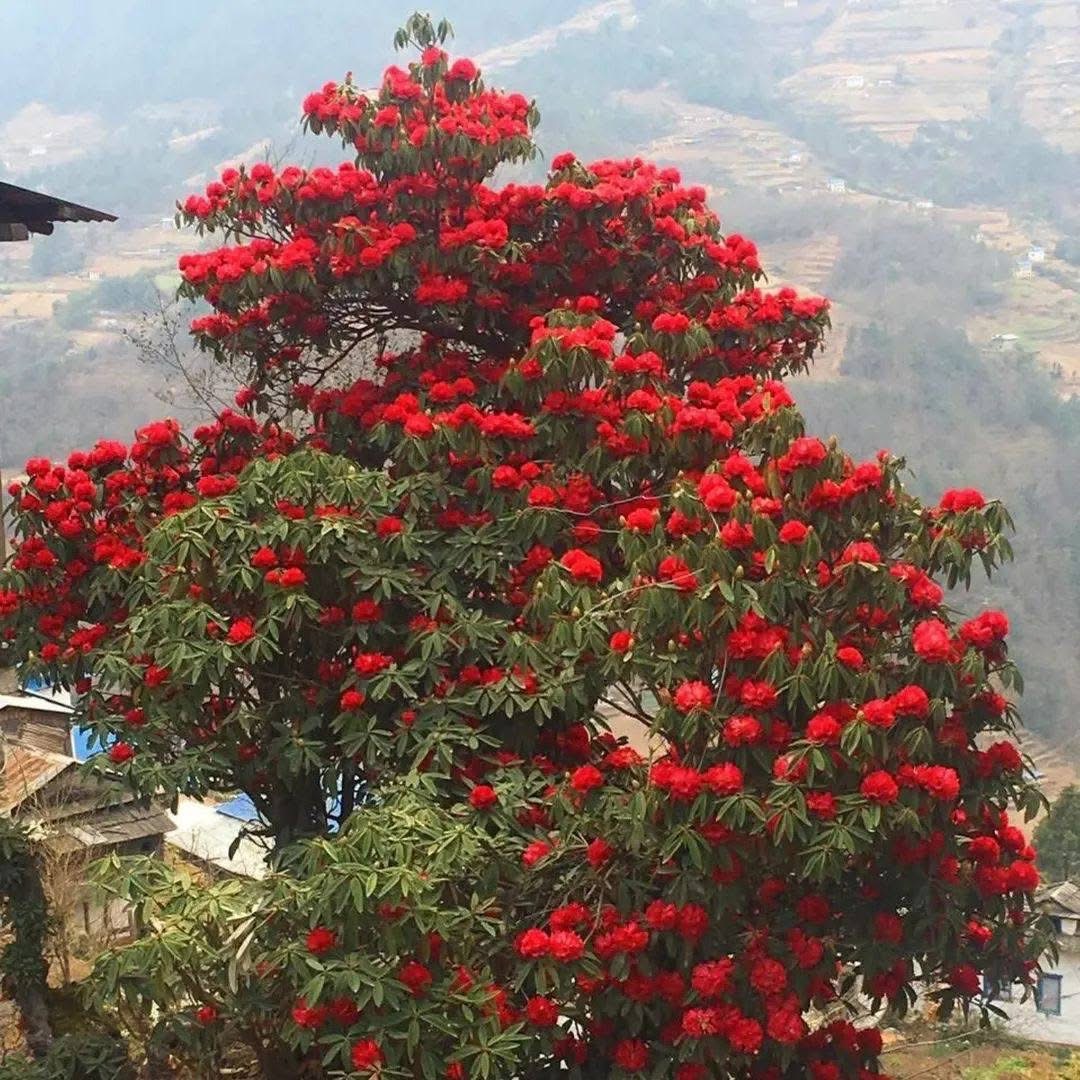
If there's one reason to specifically choose May over other trekking seasons, it's this: the rhododendron forests are in bloom. Nepal's national flower turns entire hillsides between roughly 2,000 and 3,000 meters into a wash of red, pink, and white, and on Manaslu — where the crowds are thin compared to Annapurna's rhododendron trails — you often get whole stretches of forest completely to yourself. Walking through it with Manaslu's icefall occasionally flashing through the canopy is one of those moments that photos never quite do justice to.
Villages that shift culture as you climb
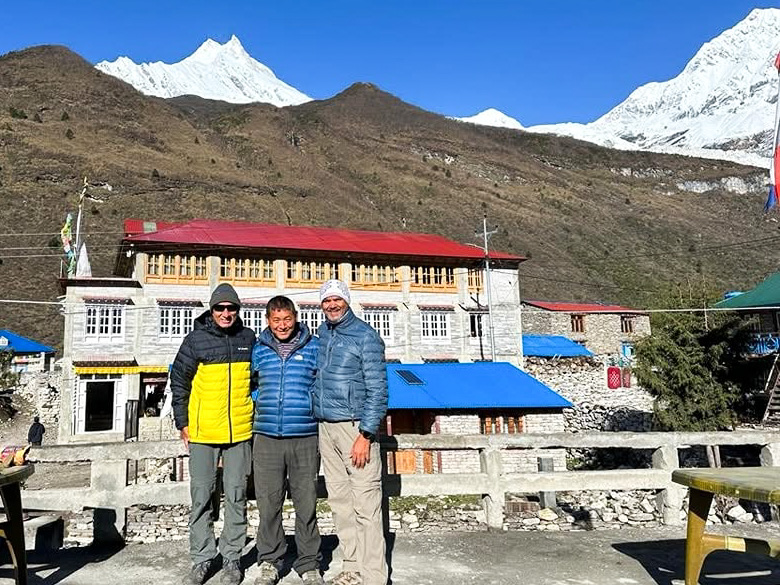
One of the most underrated parts of this trek is watching the culture change under your feet. Lower down, in places like Jagat and Deng, the villages feel Gurung and Hindu-influenced, with terraced farms and prayer flags mixed in with temple bells. By the time you reach Namrung, Lho, and Samagaon, you've crossed into distinctly Tibetan Buddhist territory - mani walls, chortens, monasteries with deep maroon-robed monks, and yak herds grazing on hillsides.
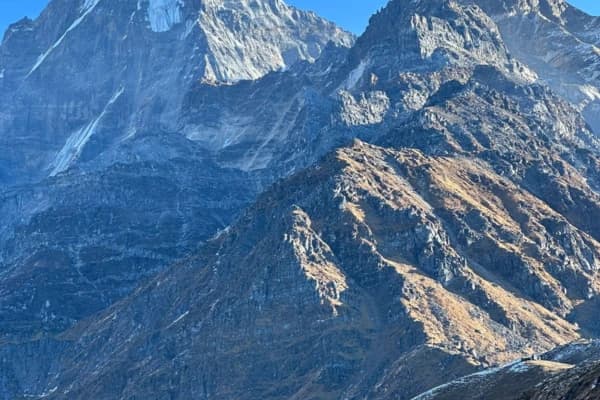
Samagaon in particular is worth slowing down for. It sits in a wide, high valley with Manaslu looming directly behind it, and most itineraries build in an acclimatization day here. Use it. Hike up to Manaslu Base Camp or the Pungyen Gompa if your legs are willing - the views back down over the village and glacier are some of the best on the entire route.
Larkya La: The Trek's One of the Main Attractions
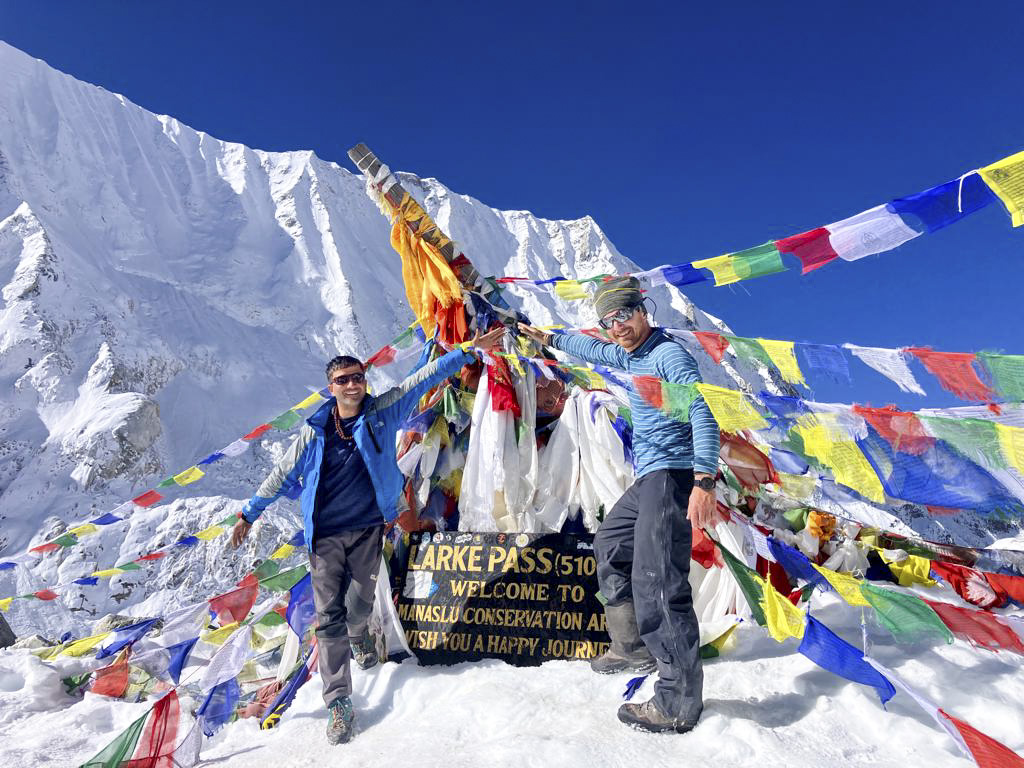
Everything builds toward Larkya La, the 5,106-meter pass that connects the Manaslu side of the circuit to the Annapurna Circuit near Bhimtang. In May, this pass is usually in good condition - most of the deep winter snow has melted or compacted enough to be walkable, though you can still hit fresh snow on the upper approach depending on how the season's gone.
The crossing day is long, typically eight to nine hours, and it starts in the dark, well before sunrise, so you're up and over before the wind picks up in the afternoon. It's cold at the top, genuinely cold, and the air is thin enough that you'll notice every step. But the payoff is real: from the pass you get sweeping views of Himlung Himal, Cheo Himal, and the sprawling glacial landscape below. Then comes the knee-jarring descent into Bhimtang, a relief in every sense of the word.
Weather Realities to Plan around
May isn't flawless. As the month goes on, especially in the back half, you start to feel the monsoon gathering itself in the distance. Afternoons can bring cloud buildup and occasional short showers, particularly at lower elevations. Mornings are almost always your clearest window for views, so an early start isn't just about beating the crowd - it's about beating the weather.
Early May tends to be more stable than late May, so if mountain visibility on the pass is a top priority, aim for the front half of the month if your schedule allows it.
Practical notes worth knowing
Manaslu is a restricted area, which means independent trekking isn't allowed - you'll need a licensed guide and a minimum of two trekkers on your permit, along with the Manaslu Restricted Area Permit, Annapurna Conservation Area Permit, and Manaslu Conservation Area Permit. It's more paperwork than Everest or Annapurna , but it's also exactly why the trail stays quiet.
Teahouses along the route are simple but genuinely welcoming, and in May you generally won't struggle for a bed, since this isn't peak season like October. Pack for a wide temperature range - light, breathable layers for the lower gorge, and proper insulation, a warm hat, and gloves for Samagaon and the pass. A sleeping bag rated to at least -10°C is a smart call even though the lodges provide blankets.
Trekking around Manaslu in May means walking through blooming forests, watching villages shift from Hindu to Tibetan Buddhist right in front of you, and crossing a genuinely tough high pass while the weather is mostly on your side. It's quieter than its neighboring circuits, a little more demanding in terms of permits and logistics, and all the more rewarding for it.
If you want mountains without the crowds, this is about as good a window as the calendar gives you.
Need Help? Call Us+977 9856073085orChat with us on WhatsApp
Latest Travel Blogs
Oct 06, 2026By ABC
Trekking the Annapurna Circuit in September
Oct 04, 2026By ABC
Annapurna Circuit Trek in 2027
Oct 01, 2026By ABC
Mardi Himal Trek in May: A Short Hike into the Clouds
Need Help? Call Us.+977 9856073085