
Most trekkers picture Everest Base Camp (EBC) in the golden light of autumn or the flowering rhododendrons of spring. Winter - December through February - is the road less traveled, and for good reason: it's cold, the days are short, and high passes can close without warning. But winter also brings something the busy seasons can't offer: empty trails, crystal-clear mountain views, and a version of the Khumbu that feels raw, quiet, and entirely your own. If you're considering this Everest base camp trek in winter, between December and February, here's an honest, detailed look at what you're signing up for.
Everest Base Camp Trek in winter: What to Really Expect
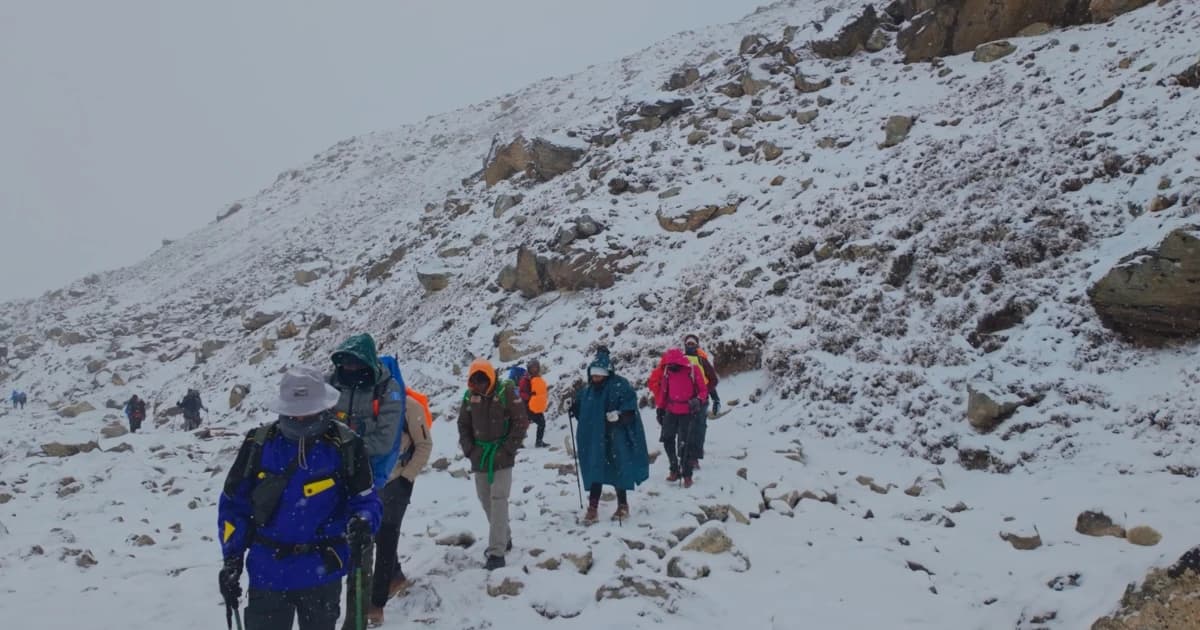
Weather Conditions in Everest in winter
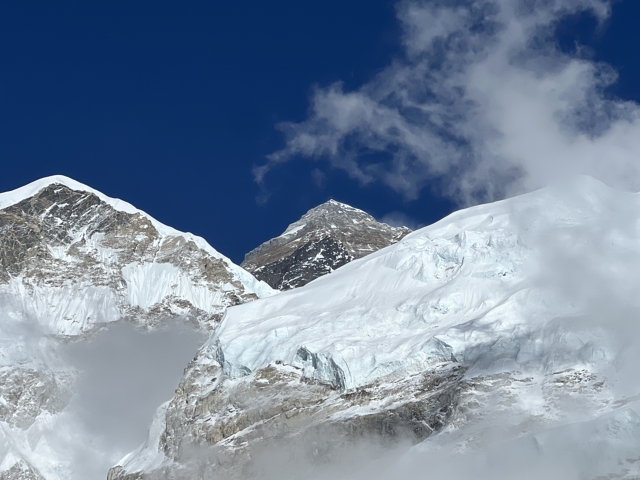
Winter in the Everest region is defined by cold, dry, and generally stable weather. The monsoon clouds that blur mountain views in summer are long gone, and the heavy crowds of October and November have thinned out considerably. What's left is a crisp, clear sky that often delivers some of the best mountain photography of the year. Mornings typically start clear and calm, with clouds - if any - building up by early afternoon before clearing again at night.
That said, "clear" doesn't mean "mild." Winter storms do occur, particularly in December and February, and when they hit, they hit hard - heavy snowfall, whiteout conditions, and strong winds above 4,000 meters.
The Khumbu Valley can experience sudden temperature drops and biting katabatic winds that sweep down from the glaciers in the late afternoon and evening. January is usually the coldest and most stable month, with fewer weather disturbances than the shoulder months of December and February, which sit closer to the transition periods and can see more unpredictable snow.
Daylight hours are also shorter in winter, generally from around 6:30 AM to 5:30 PM, which means trekking days need to be planned more tightly than in peak season. Wind chill is a major factor: even when the thermometer reads a "bearable" number, gusts at altitude can make it feel 10–15 degrees colder. Humidity is low, which helps snow stay powdery rather than turning to slush, but it also means the air is exceptionally dry, leading to chapped lips, nosebleeds, and faster dehydration - something trekkers often underestimate.
Condition of Everest Base Camp Trekking Trail in winter
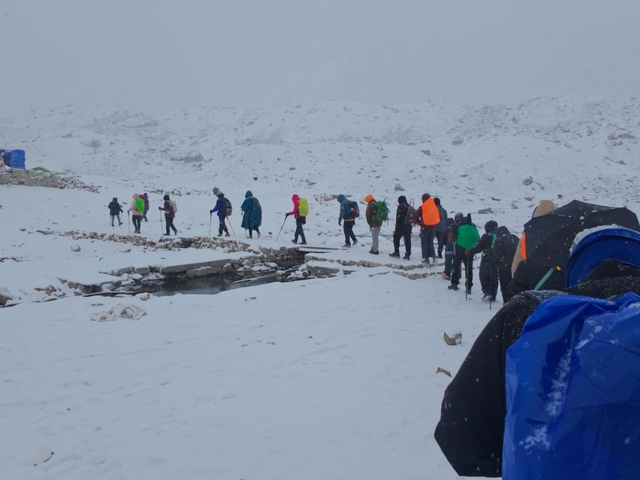
The EBC trekking trail itself remains open and passable throughout winter, and thousands of trekkers still complete it every year during these months. The lower sections of the trail - through Lukla, Phakding, and up to Namche Bazaar - are usually in good condition, with only occasional light snow that melts quickly given the lower elevation and more direct sun exposure.
Above Namche, conditions become more trail-dependent and can change day to day. After a fresh snowfall, sections around Tengboche, Dingboche, and especially the final push to Gorak Shep and Everest Base Camp can be covered in snow and ice, particularly in shaded areas and on north-facing slopes where sunlight rarely reaches. Icy patches on stone steps and narrow suspension bridges demand extra caution, and many trekkers choose to use micro-spikes or crampons for added grip once past Dingboche.
The good news is that the trail is well-established and heavily used even in winter by porters, guides, and yak trains supplying the villages, so it rarely becomes impassable for more than a day or two after a storm. Trail markers, teahouses, and lodges along the route remain functional reference points.
However, winter trekkers should build in buffer days into their itinerary, since a snowstorm can delay onward movement or flights, and rushing through icy terrain is where most winter trekking injuries happen. The Khumbu Icefall and areas immediately around Base Camp itself are typically snow-covered and can look dramatically different from the brown, rocky base camp seen in trekking season photos - often more beautiful, but also colder and starker.
Temperatures below Namche Bazaar
Below Namche Bazaar — through Lukla (2,860m), Phakding (2,610m), and Monjo - winter temperatures are noticeably milder than what awaits higher up, though still cold by lowland standards. Daytime temperatures in this stretch typically range between 5°C and 12°C when the sun is out, making trekking comfortable in layers. Nighttime lows, however, can drop to between -5°C and 0°C, especially in December and January.
This lower section benefits from denser forest cover, lower elevation, and more consistent sun exposure during the day, which keeps the trail relatively snow-free most of the winter. Teahouses here are generally warmer and better insulated than those higher up, and many now have proper heating in dining areas. This part of the trek functions almost as an acclimatization buffer - cold enough to remind you winter has arrived, but forgiving enough that most trekkers move through it without much difficulty.
Temperatures above Namche Bazaar
Once you climb past Namche Bazaar (3,440m) toward Tengboche, Dingboche, Lobuche, and Gorak Shep, winter reveals its true character. Daytime temperatures in this zone generally range from -5°C to 5°C under clear skies, but they fall dramatically once the sun dips behind the peaks - often by early afternoon in narrow valleys. Nighttime and early morning temperatures regularly plunge to between -15°C and -25°C, with the coldest recorded stretches near Gorak Shep (5,164m) and Everest Base Camp (5,364m) sometimes dropping below -30°C during particularly harsh spells in December and January.
Wind chill intensifies this considerably. A relatively "moderate" reading of -15°C can feel closer to -25°C or -30°C, with strong wind gusts common at higher camps. Water bottles freeze solid overnight unless kept inside a sleeping bag, and even inside teahouse dining rooms, temperatures away from the stove can hover just above freezing. This is the stretch where proper gear - a sleeping bag rated to at least -20°C, a reliable down jacket, and quality thermal layers - stops being optional and becomes essential for both comfort and safety.
Are Teahouses Open in winter?
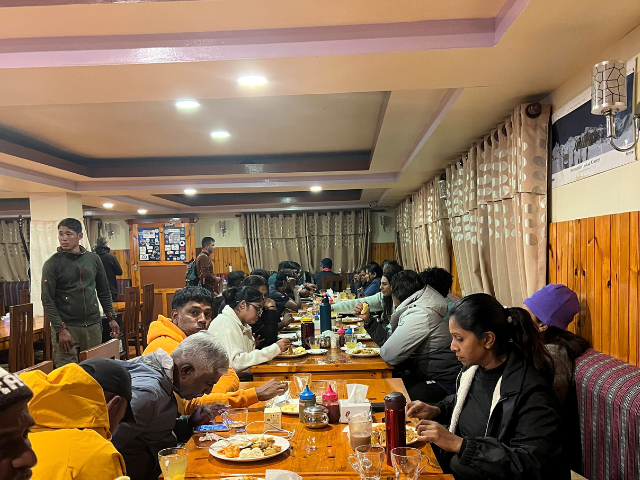
Yes, the vast majority of teahouses along the main EBC route remain open throughout winter, though the experience differs from peak season. Because winter sees a fraction of the trekker traffic of autumn or spring, many lodge owners scale back operations - some smaller or seasonal teahouses close entirely, particularly in less-trafficked side routes, while the main lodges along the primary trail to Base Camp stay operational to serve the steady trickle of winter trekkers, porters, and mountaineering teams.
The teahouses that remain open typically concentrate heat in a central dining hall, usually warmed by a yak-dung or wood-burning stove, which becomes the social and practical hub of the evening. Bedrooms, by contrast, are almost never heated and can be nearly as cold as the outside air, so a warm sleeping bag is non-negotiable. Hot showers, where available at all in winter, are limited, and some water pipes freeze, meaning wash facilities can be basic or nonexistent at higher elevations.
One real advantage of winter is availability and atmosphere: unlike peak season, when popular teahouses fill up fast and rooms need pre-booking, winter trekkers usually have their pick of rooms, quieter common areas, and more personal attention from lodge owners who have more time to chat. Menus are generally the same year-round - dal bhat, noodles, momos, and basic Western dishes - though variety can shrink slightly at the highest lodges due to more difficult winter supply runs.
Is Everest Base Camp Trek in winter a Good Idea?
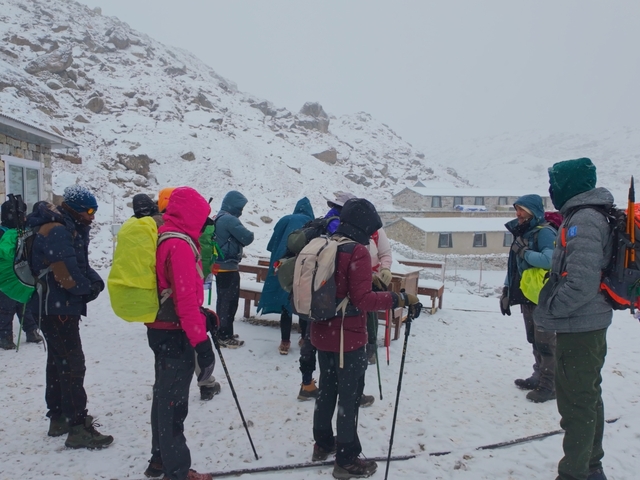
Whether winter is the right season for your EBC trek really depends on what you're looking for and how prepared you are.
For experienced trekkers or those comfortable in genuinely cold conditions, winter offers real rewards: dramatically clear mountain views without the haze of pre-monsoon dust or the crowds of high season, quieter trails and teahouses, easier flight bookings to Lukla, and a rawer, more intimate encounter with the Khumbu landscape and its Sherpa communities. Photography enthusiasts in particular often rate winter as the best season for capturing sharp, unobstructed views of Everest, Lhotse, Ama Dablam, and the surrounding peaks.
On the other hand, winter is unforgiving of poor preparation. The extreme cold above Namche, shorter daylight hours, the real possibility of flight delays or cancellations at Lukla due to weather, and the physical toll of trekking in sub-zero temperatures at altitude make this a more demanding version of an already challenging trek. It is not typically recommended for first-time high-altitude trekkers, those sensitive to cold, or anyone without proper cold-weather gear and a flexible itinerary that can absorb a few unplanned delay days.
For the right person - fit, well-equipped, mentally prepared for cold, and drawn to solitude over comfort - a winter EBC trek can be one of the most memorable versions of this classic route. For others, the shoulder seasons of March-May or late September-November will offer a gentler, more predictable experience.
The mountain isn't going anywhere; the question is really which experience of it you're after. Let us know if you are up for a winter trekking experience in the Everest.
Need Help? Call Us+977 9856073085orChat with us on WhatsApp
Latest Travel Blogs
Oct 06, 2026By ABC
Trekking the Annapurna Circuit in September
Oct 04, 2026By ABC
Annapurna Circuit Trek in 2027
Oct 01, 2026By ABC
Mardi Himal Trek in May: A Short Hike into the Clouds
Need Help? Call Us.+977 9856073085