
There is a moment on the Annapurna Base Camp trek that almost everyone talks about afterwards. You have been walking uphill for days, mostly staring at your boots, and then the valley opens. The walls pull back. And suddenly you are standing in a ring of mountains so large and so close that your brain refuses to process the scale. People go quiet. Some laugh. A few cry, and then pretend it was the wind.
What Makes Trekking to Annapurna Base Camp a Lifetime Experience

That moment is why this trek keeps showing up on people's lists of things they will never forget. But it is not the only reason. The Annapurna Base Camp trekking, usually shortened to ABC Trek , earns its reputation over seven to twelve days of walking, and almost every one of those days gives you something different.
Here is what actually makes it stay with you.
You Walk through Four Seasons in a Week
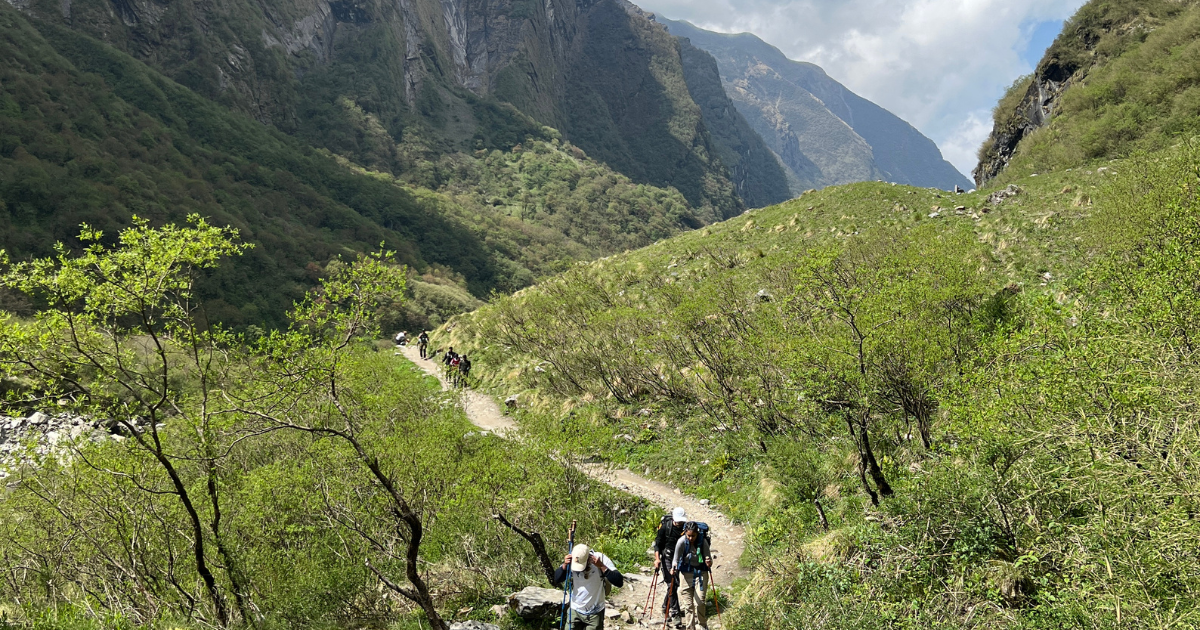
Most treks show you one kind of landscape. ABC gives you a whole sequence of them, and the transitions are fast enough that you notice them happening.
You start low, around 800 to 1,100 metres, in warm subtropical country. Terraced rice fields stack up the hillsides like green staircases. Banana trees. Buffalo in the path. Kids walking to school in flip-flops on stone steps that would ruin your knees.
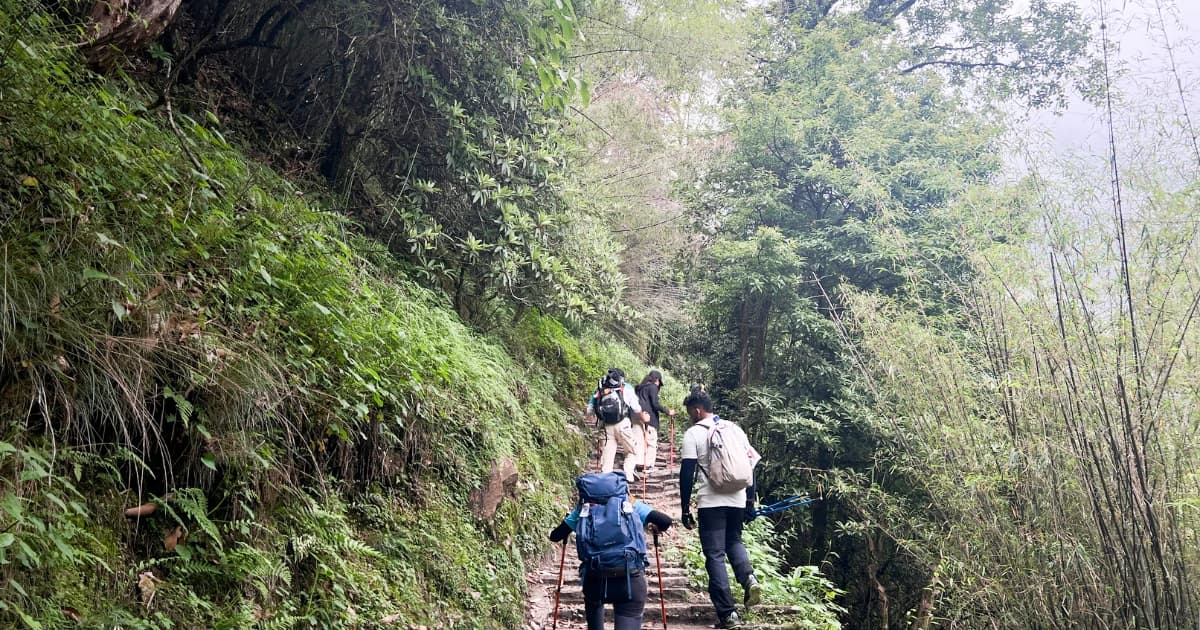
A day or two later you are in dense forest, all moss and dripping ferns and bamboo so thick it closes overhead like a tunnel. In March and April the rhododendron forests around Ghorepani and Chhomrong are absurd, whole hillsides glowing red and pink, petals all over the trail.
Then the trees thin out. The air gets sharp. By the time you reach Machhapuchhre Base Camp at 3,700 metres, there is nothing but rock, snow, and grass burnt gold by the cold. From tropical to alpine in about five days of walking. Very few treks anywhere compress that much change into that short a distance.
The Sanctuary is Unlike Anywhere Else
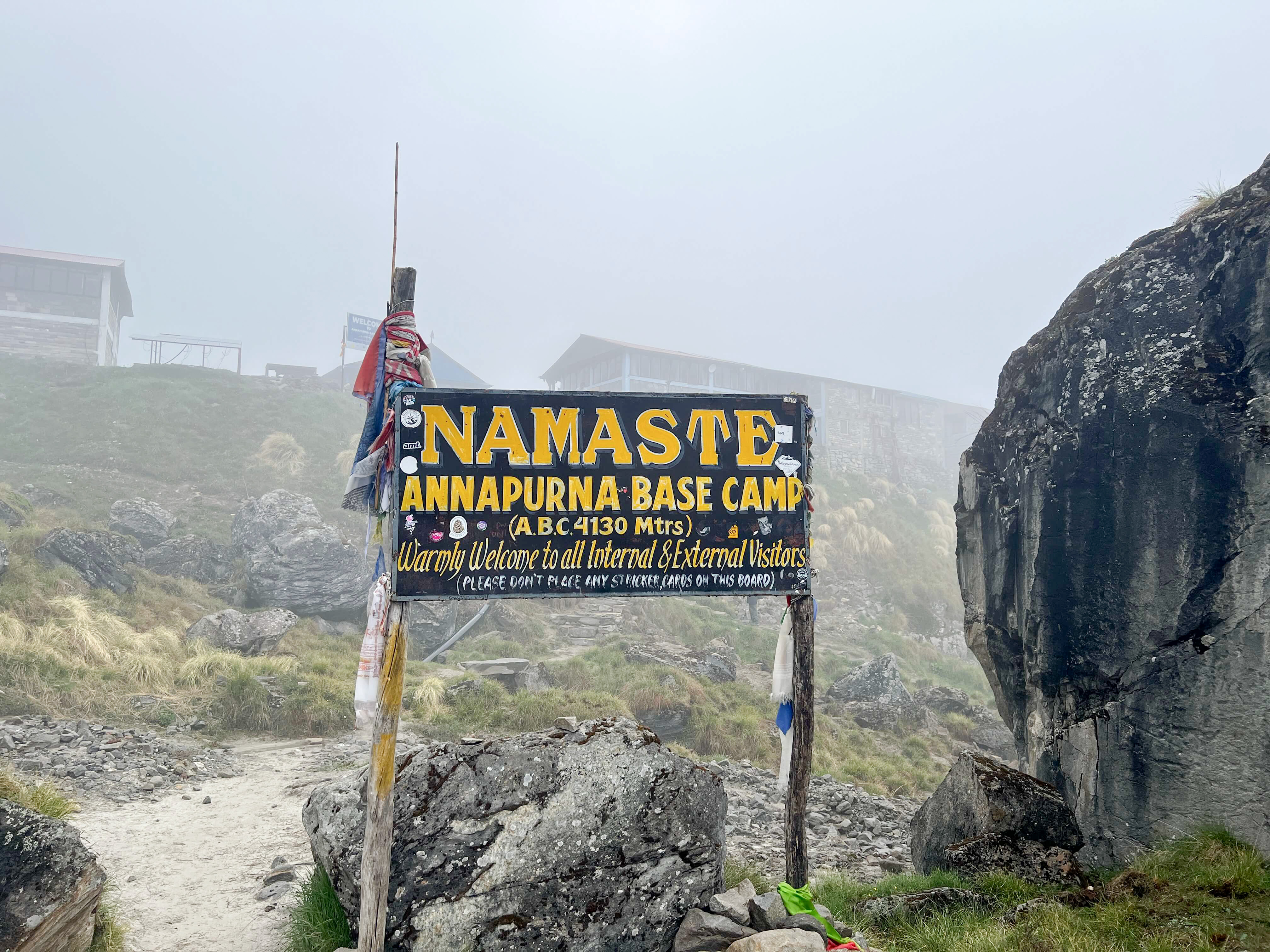
Annapurna Base Camp sits inside what is called the Annapurna Sanctuary, a glacial basin ringed almost entirely by peaks over 7,000 metres. The only way in is a narrow gorge between Hiunchuli and Machhapuchhre, which is why the place feels sealed off from the rest of the world.
Stand in the middle of it and turn slowly. Annapurna I at 8,091 metres, the tenth-highest mountain on earth and the first 8,000er ever climbed. Annapurna South. Hiunchuli. Gangapurna. Tharpu Chuli. And Machhapuchhre, the fishtail peak, which has never been summited and never will be, because it is sacred to Lord Shiva and climbing it is forbidden.
You are at 4,130 metres, standing on flat ground, with mountains rising four vertical kilometres directly above you on nearly every side. No foothills in the way. No long approach. Just the wall of them, right there. On most Himalayan treks you view the giants from a distance. Here you are inside the circle.
Sunrise that Justifies the Alarm
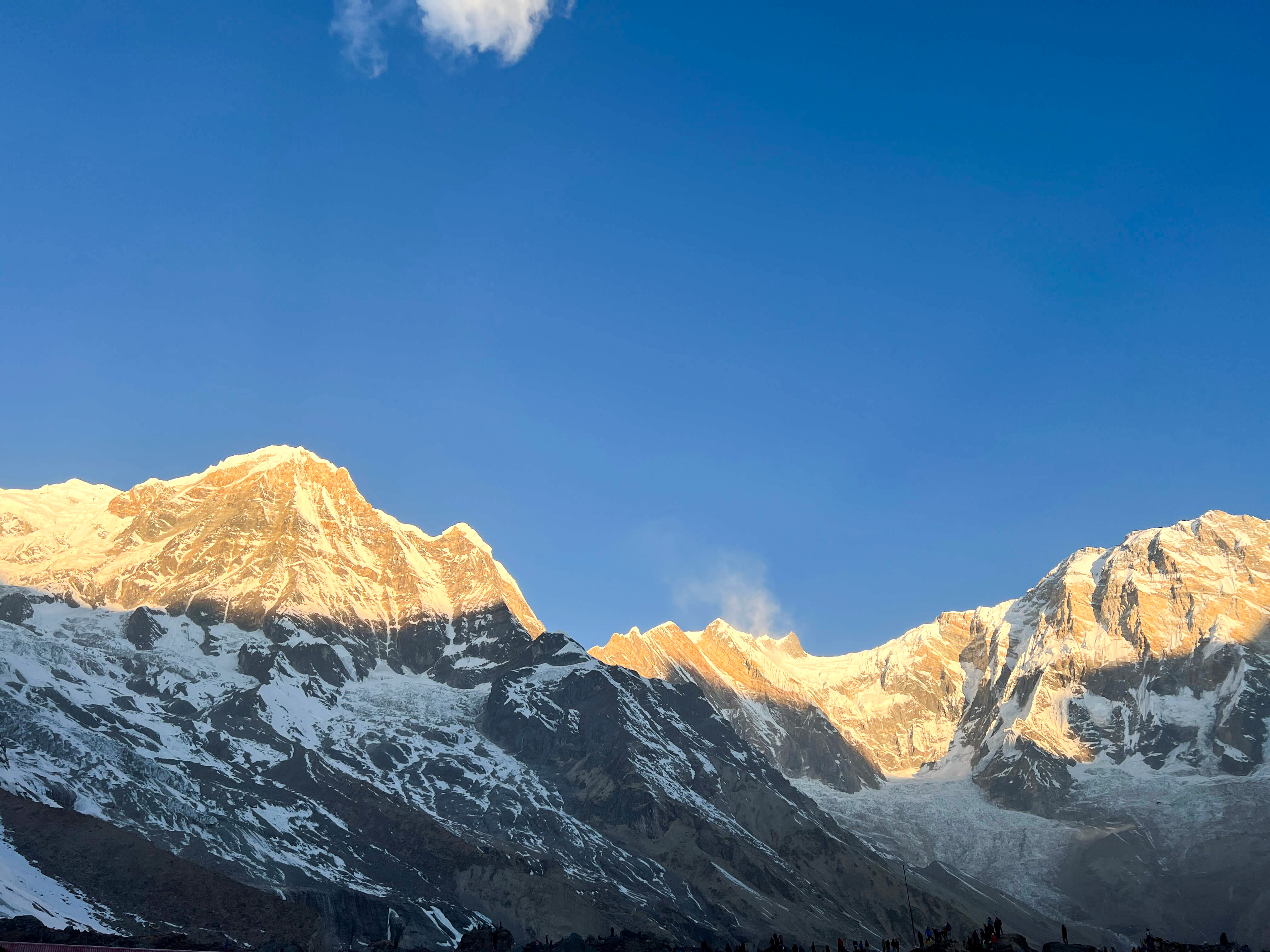
Nobody enjoys getting out of a sleeping bag at 5 a.m. at 4,130 metres. You do it anyway, in every layer you own, and you stand outside with a cup of tea going cold in your hands.
The first light does not hit the base of the mountains. It hits the summits, turning Annapurna South a pale gold while everything below you is still blue and frozen. Then the line of light creeps down, slowly, minute by minute, until the whole basin is lit and the temperature jumps ten degrees. It takes maybe thirty minutes. People stand there for all of it without saying much.
If you only remember one thing from the trek, it will probably be this.
The Trail Runs through Real Villages
This is something trekkers underestimate before they go. The route to ABC is not a wilderness corridor with campsites. It runs straight through Gurung and Magar villages where families have lived for generations.
Ghandruk is a proper stone-built hill village with slate roofs and a Gurung museum. Chhomrong clings to a slope so steep that the main street is basically a staircase. Every evening you stop in a teahouse, order dal bhat, and sit around a stove with a Nepali family who run the place, plus a random assortment of Israelis, Koreans, Germans, and Australians.
The dal bhat is unlimited, by the way. They will keep refilling your plate until you surrender. After eight hours of climbing stone steps, this feels like one of the great kindnesses of human civilisation.
You also sleep in a bed every night. No tent, no carrying food, no cooking. That changes the whole texture of the experience. You end the day warm, fed, and talking to people instead of wrestling with guy lines in the dark.
Hard Enough to Matter, Accessible Enough to Finish
ABC sits in a sweet spot that a lot of treks miss. It is genuinely demanding. There are days with 3,000 stone steps. Your quads will complain. The descent from Ghorepani is longer than anyone warns you about.
But the maximum altitude is 4,130 metres, which is high enough to feel but low enough that serious altitude sickness is uncommon if you take the standard itinerary. There is no technical climbing. No ropes, no crampons in the normal season. You do not need mountaineering experience or a mountain of gear.
So a reasonably fit person who trains for a couple of months can do it and finish having done something legitimately hard. That combination is rare. You get the full weight of accomplishment without needing to be an athlete, and you arrive at base camp having actually earned the view.
The Hot Springs on the Way Down
A small detail that people always mention. On the descent, at a place called Jhinu Danda, there are natural hot springs by the Modi Khola river, about twenty minutes down a steep path from the village.
After a week of cold water and colder mornings, lowering yourself into a stone pool of hot water with the river roaring past is a very specific kind of bliss. It is not the reason you came. It might be the moment your body forgives you.
What You Actually Bring Home
The photographs never work. You will take hundreds, and none of them will convey what it was like to stand in that basin. The camera flattens it.
What you bring home is different. The way silence sounds at 4,000 metres. The teahouse owner who noticed you were struggling and brought you ginger tea without being asked. The specific feeling of your legs on day six, when they stopped hurting and just started working. A friendship with someone from a country you have never visited, formed over four days of walking and one terrible card game.
And a recalibration. Once you have stood inside the Annapurna Sanctuary at sunrise, a certain amount of daily noise loses its grip on you. Things that felt urgent seem smaller. That effect fades, but it never fades completely.
Go When You Can
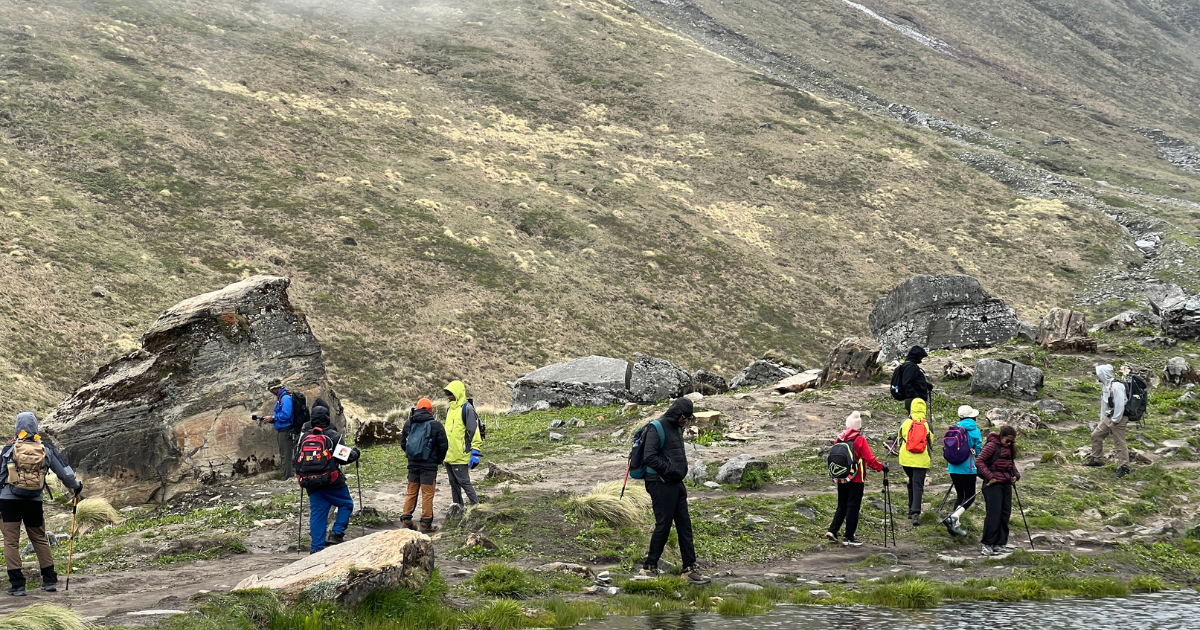
The best windows are March to May, when the rhododendrons are out and the days are mild, and October to November , when the post-monsoon air is so clear the mountains look artificially sharp. Winter is possible but cold and snow-prone at the top. Monsoon means leeches, cloud, and no views.
Whenever you go, do it while your knees still like you. Some experiences genuinely live up to the way people describe them. This is one of them.
Need Help? Call Us+977 9856073085orChat with us on WhatsApp
Latest Travel Blogs
Oct 12, 2026By ABC
Why Trek to Everest Base Camp in 2027: 10 Reasons to Go
Oct 06, 2026By ABC
Trekking the Annapurna Circuit in September
Need Help? Call Us.+977 9856073085