
Only a few trekking routes in the world pack as much variety into a single trail as the Annapurna Base Camp (ABC) trek. In roughly six to ten days, you move through terraced rice paddies, dense rhododendron forests, cliffside villages, and finally a natural amphitheater of ice and rock at 4,130 meters, surrounded by some of the highest peaks on Earth. And if you're wondering when to go, May consistently ranks as one of the best months to do the Annapurna Base Camp Trek.
Annapurna Base Camp Trek in May: A Complete Guide to Nepal's Spring Classic

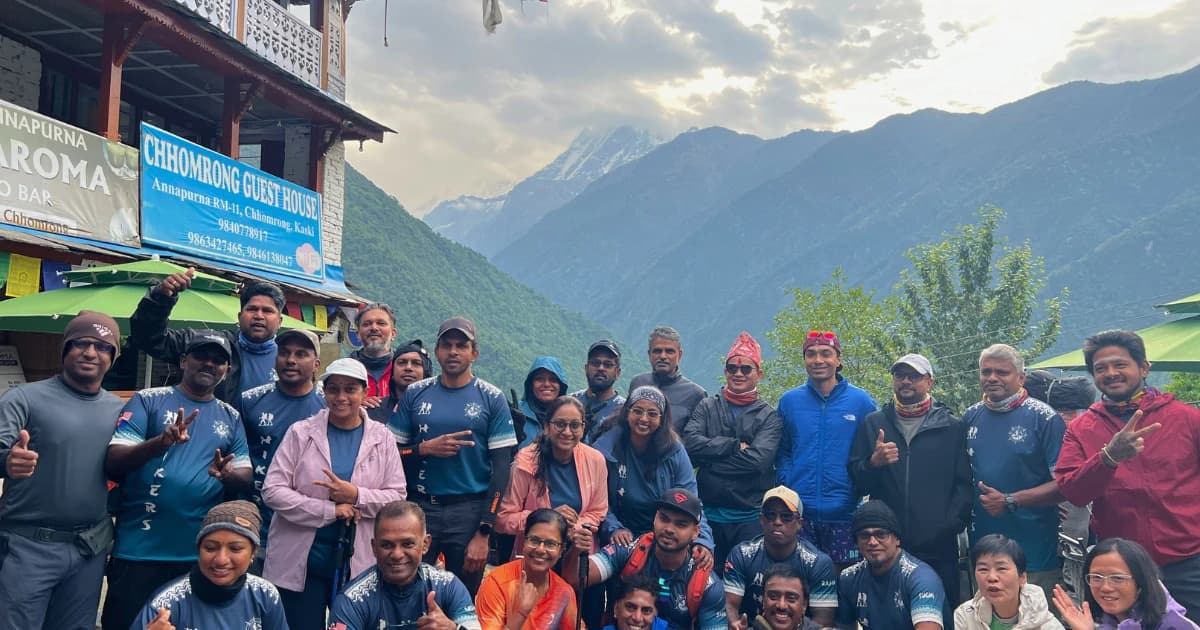
Late spring sits in that sweet spot after the harsh winter cold has faded but before the monsoon rains arrive. The result is a trek that rewards you with blooming forests, long daylight hours, and some of the clearest mountain panoramas of the year. Here's everything you need to know about tackling ABC in May.
Why May is a Prime Time for Annapurna Base Camp Trek
May falls at the tail end of Nepal's spring trekking season, and it has its own distinct character compared to the peak bloom of March and April. By May, the famous rhododendron forests along the lower trail are typically still holding onto color, especially at higher elevations where the blooming season lags behind the valleys. Days are noticeably longer, giving you more daylight to enjoy the trail and settle into teahouses without rushing.
Temperatures are also more forgiving than earlier in spring. Overnight lows at Annapurna Base Camp itself will still dip below freezing, but the bitter cold of February and March has eased. Lower down, in villages like Ghandruk, Chhomrong, and Sinuwa, daytime hiking temperatures are comfortable, often ranging from the high teens to low twenties Celsius. This makes May a particularly appealing option for trekkers who want mountain views without winter-level cold.
What the Weather Actually Feels Like
Expect mild, often warm days lower on the trail, cooling steadily as you gain altitude. Mornings tend to be the clearest time to view the peaks, since afternoon cloud build-up is common as May progresses and the pre-monsoon humidity increases. This cloud pattern isn't unique to May, but it becomes more noticeable as the month goes on, so many trekkers aim to reach viewpoints and Base Camp itself early in the day.
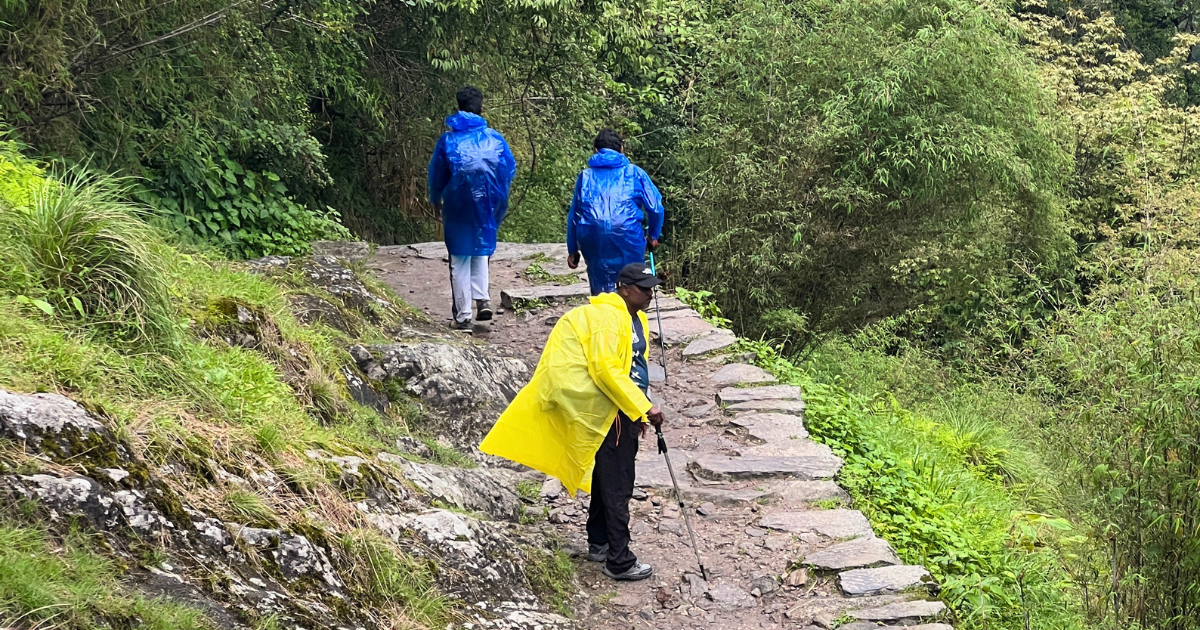
Occasional afternoon showers or thunderstorms are possible, especially in the final stretch of the month as the monsoon approaches. Snow can still fall at higher elevations, particularly around Machhapuchhre Base Camp (MBC) and ABC, so packing for both warm valley walking and cold, potentially wet high-altitude conditions is essential.
The Trail: What to Expect Day by Day
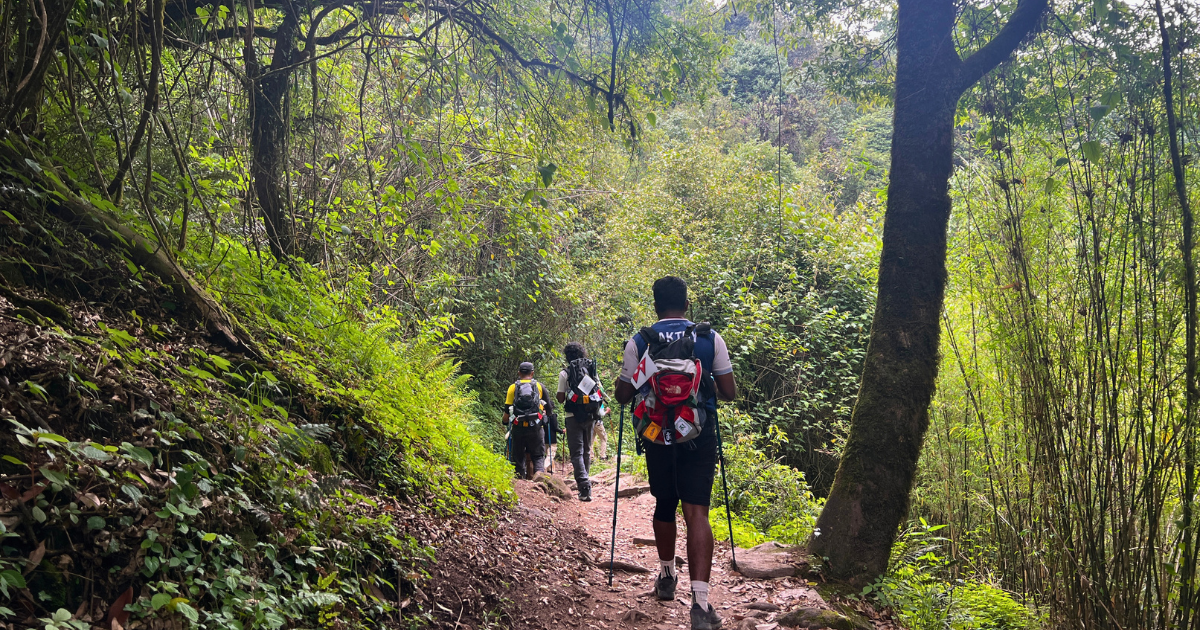
Most itineraries run six days to fifteen days round trip, depending on your starting point (Nayapul or Ghandruk are common) and how many acclimatization or buffer days you build in.
The trek typically begins with a drive from Pokhara to Nayapul, followed by a walk to Tikhedhunga or Ulleri. From there, the trail climbs through stone-step villages into Ghorepani , often paired with a pre-dawn side trip to Poon Hill for a sweeping sunrise view of the Annapurna and Dhaulagiri ranges. In May, this sunrise hike is particularly rewarding, since the surrounding hillsides are often still green and flowering.
From Ghorepani, the route descends and climbs again through Tadapani before reaching Chhomrong, the last major village and gateway to the Modi Khola gorge. This is where the landscape shifts dramatically. The trail narrows, forests thicken with bamboo and rhododendron, and the valley walls steepen as you pass through Bamboo, Dovan, and Himalaya. Waterfalls fed by spring snowmelt are especially active in May, adding drama to this section.
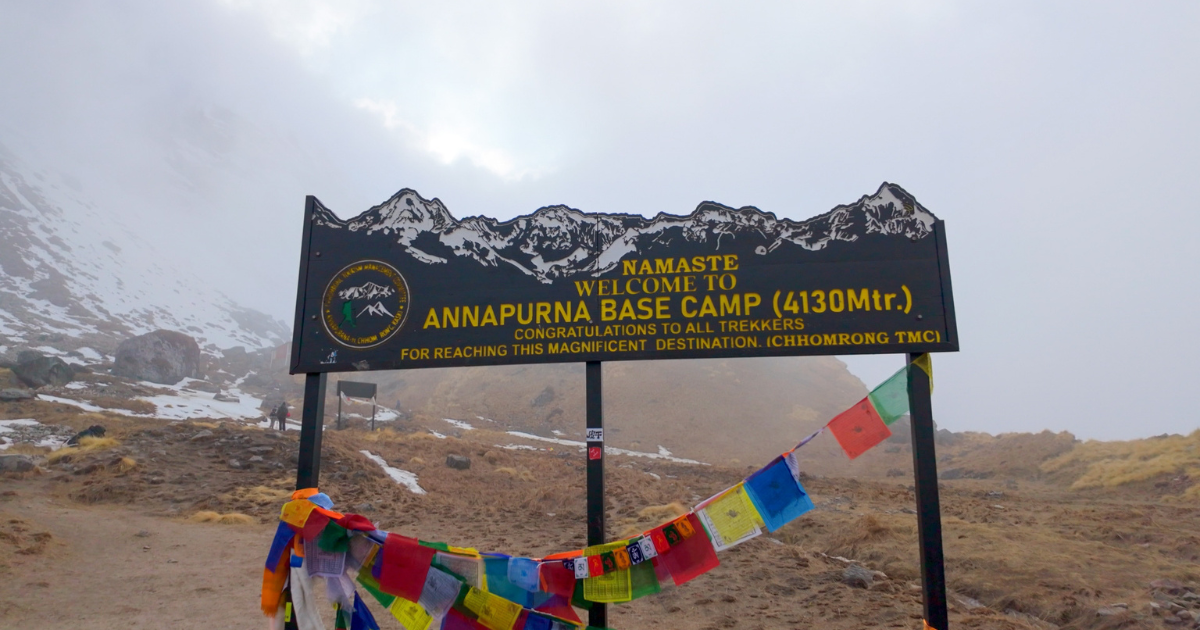
The final approach takes you through Deurali and Machhapuchhre Base Camp before the trail opens into the Annapurna Sanctuary itself. Reaching ABC, ringed by Annapurna I, Annapurna South, Machhapuchhre (Fishtail), and Hiunchuli, is the emotional high point of the trek. Standing in that bowl of peaks at sunrise, with the light hitting the summits in shades of gold and pink, is the reward for days of steady climbing.
Altitude and Acclimatization
Annapurna Base Camp sits at 4,130 meters, which is high enough that altitude sickness is a real consideration, even though the trek doesn't reach the extreme elevations of routes like Everest Base Camp . The relatively fast ascent profile on some itineraries means it's worth building in rest days, staying hydrated, ascending steadily rather than rushing, and paying attention to symptoms like headache, nausea, or dizziness.
May's milder temperatures make it easier to stay properly hydrated and comfortable compared to the depths of winter, but altitude doesn't care about the season. Take it seriously regardless of how good the weather looks.
Crowds and Trail Conditions
May is a shoulder period within the spring season. It's busier than the off-season months of summer monsoon or deep winter, but generally quieter than the peak rush of October and November , or even the early spring surge in March and April . This makes it a good choice for trekkers who want good weather and blooming scenery without fighting for teahouse rooms at every stop.
Trail conditions in May are usually dry and stable on the lower and middle sections, though higher up, leftover snow patches from winter can still linger in shaded areas, particularly near MBC and ABC. Trekking poles and solid ankle support are worth having for the uneven, sometimes slick, stone steps throughout the route.
What to Pack for a May Trek
A typical packing list for a trek in May includes:
- A moisture-wicking base layer and a warm mid-layer fleece or down jacket for cold mornings at higher camps
- A waterproof, breathable outer shell for possible afternoon showers
- Trekking trousers, plus shorts or lightweight pants for warmer, lower-altitude days
- A warm hat and sun hat, since you'll want both depending on elevation and time of day
- Sturdy, broken-in trekking boots with good ankle support
- A sleeping bag rated for below-freezing temperatures, since teahouses at higher elevations can be cold at night even in May
- Sun protection: sunglasses, sunscreen, and lip balm, as UV exposure at altitude is intense
- A refillable water bottle or bladder, plus water purification tablets or a filter
For a detailed packing list, check this blog here .
The Annapurna Base Camp trek in May offers a genuinely appealing combination: warmer days, lingering spring greenery and blossoms at higher elevations, long daylight hours, and a trail that hasn't yet been swallowed by monsoon clouds. It asks a little more preparation than a summer stroll, given the altitude and shifting mountain weather, but for trekkers chasing that iconic sunrise over the Annapurna Sanctuary, few months deliver it as reliably and beautifully as May.
Whether it's your first major Himalayan trek or one of many, standing at Base Camp with Annapurna I towering above and Machhapuchhre's sharp fishtail peak catching the first light of day is an experience that stays with you long after you're back down in the valley.
Need Help? Call Us+977 9856073085orChat with us on WhatsApp
Latest Travel Blogs
Oct 12, 2026By ABC
Why Trek to Everest Base Camp in 2027: 10 Reasons to Go
Oct 06, 2026By ABC
Trekking the Annapurna Circuit in September
Need Help? Call Us.+977 9856073085